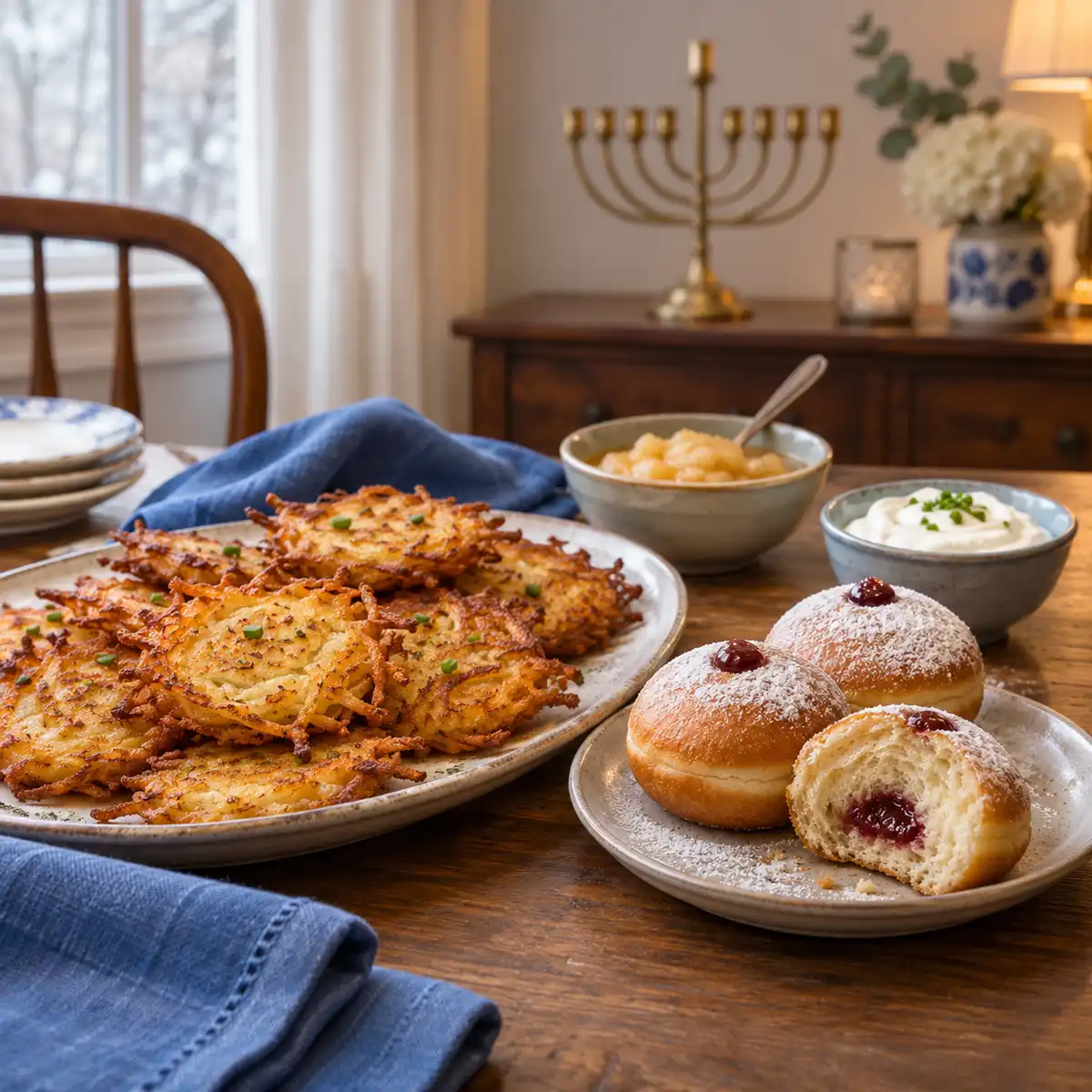
Hanukkah 2026 begins at sundown on Friday 4 December and ends at nightfall on Saturday 12 December, according to the Hebcal Jewish calendar. The first candle is lit that Friday before sundown and the eighth on Friday 11 December. For 8 nights, a good many British kitchens will be frying latkes and doughnuts.
The frying has a reason. Chabad.org tells the Temple story of a single cruse of olive oil, enough for 1 day, that burned for 8. Because the story turns on oil, Chabad says, "it is customary to eat foods fried in oil". At most tables that Hanukkah food means 2 dishes: potato latkes and jam-filled sufganiyot.
Latkes are shallow-fried in a film of oil and sufganiyot are deep-fried, and the FSA says to stop starchy food at golden yellow. That difference in oil decides most of what can go wrong.
Below are the methods from 2 published recipes, the Food Standards Agency's colour advice, the London Fire Brigade's rules for hot oil, the allergens in each food, and what a batch of latkes cost at Ocado when we priced it on 16 November 2026.
How latkes and sufganiyot are fried
Latkes are shallow-fried and sufganiyot are deep-fried. The Food for Life charity recipe fries latkes in 2 tablespoons of vegetable oil at a time in a large frying pan, while a Jewish Chronicle recipe deep-fries sufganiyot in vegetable oil heated to 160°C and checked with a sugar thermometer.
The Food for Life latkes recipe uses 750g of red-skinned potatoes, 1 onion, 2 medium eggs, 3 tablespoons of matzo meal, 1 teaspoon of baking powder and 4 tablespoons of vegetable oil in total. Potato and onion are grated, wrapped in a clean tea towel and squeezed, then squeezed a second time.
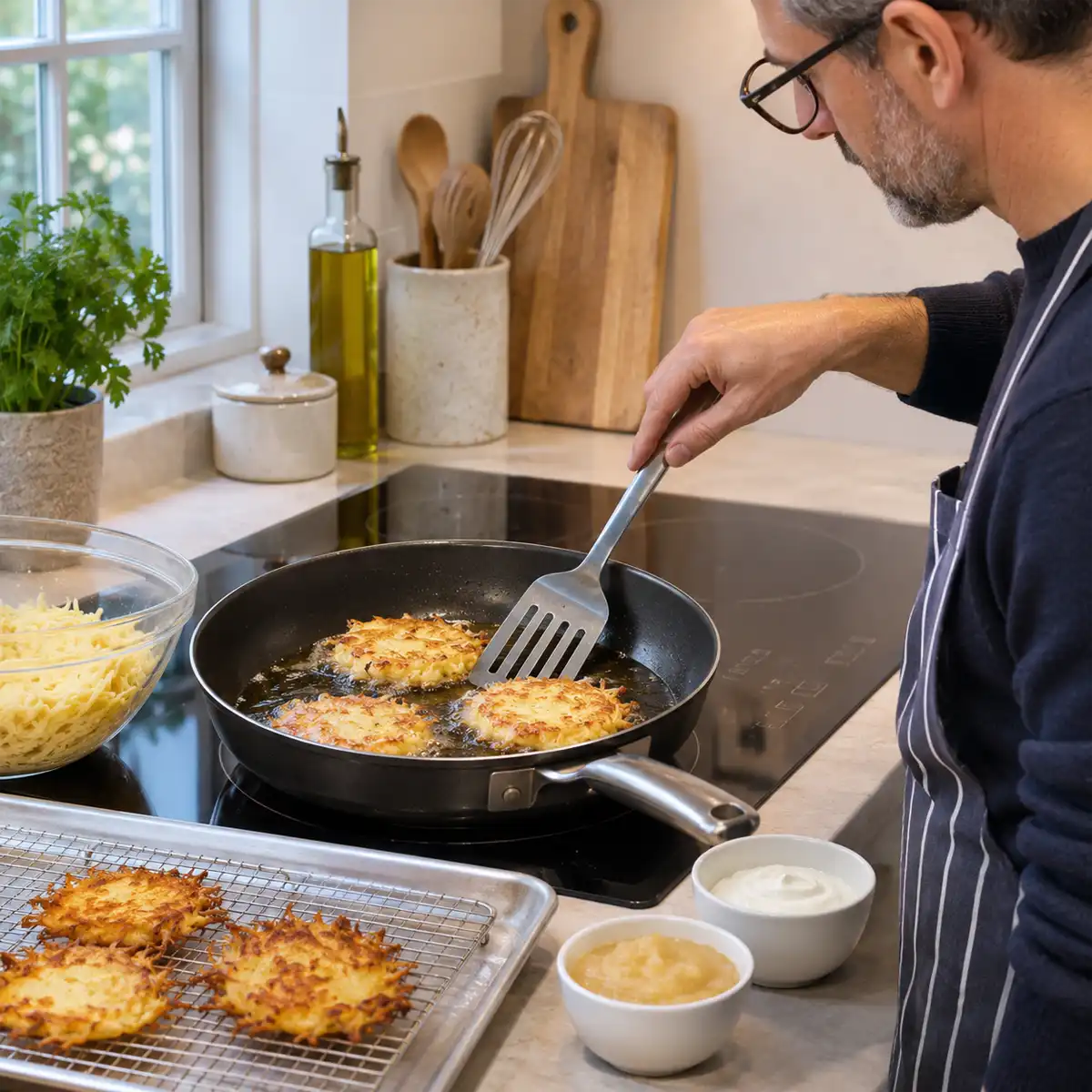
Heaped tablespoons of the mixture go into the pan over a medium heat, are flattened a little, fried until golden on the bottom, turned and finished on the other side, then drained on kitchen roll. More oil goes in before each batch. The same recipe offers almond flour in place of matzo meal for anyone avoiding gluten, a swap with its own allergen, covered below and in our page on gluten-free living in London.
The Jewish Chronicle sufganiyot recipe, published on 19 December 2022 and credited to Ta'amim, makes 20. Its dough is 7g of dried yeast, 120ml of lukewarm milk, 2 tablespoons of caster sugar, 55g of melted butter, 335g of plain flour and 2 eggs. The doughnuts are fried in batches for 1 to 2 minutes a side, drained briefly, rolled in caster sugar while warm and filled with about 1 tablespoon of jam each.
A frying pan holding a film of oil and a deep pan holding enough oil to float a doughnut are 2 different jobs. The rest of this piece treats them that way.
The damp tea towel advice is out of date
A damp tea towel thrown over a burning pan is advice many households still repeat. Current fire service advice says the opposite. The London Fire Brigade's page on pan fires gives 4 steps: do not tackle the fire yourself or try to move the pan; never throw water over it, because it could create a fireball; turn off the heat, but only if it is safe to do so; then leave the room, close the door, warn others and call 999.
Essex Fire and Rescue Service went further after a chip pan fire in July 2024. In its safety warning of 11 July 2024 it said water should never come into contact with hot oil, that even a single drop could create a dangerous fireball, and that a damp or wet tea towel should never be used.
Water matters before anything catches fire, too. The London Fire Brigade's deep fat fryer advice says food should be dry before it goes into hot oil, because oil and water are a dangerous mix. That makes one step in the latke recipe matter. The Food for Life method squeezes the grated potato and onion twice in a clean tea towel to remove as much of it as possible before it meets the pan, and that step is worth doing properly rather than once and quickly.
A pan of latkes holds far less oil than a pan of doughnuts, but the same rules apply to both. If the oil starts to smoke, the brigade says it is too hot: turn off the heat and leave it to cool. Smoke is the warning; flame is the point at which the cook stops cooking and leaves.
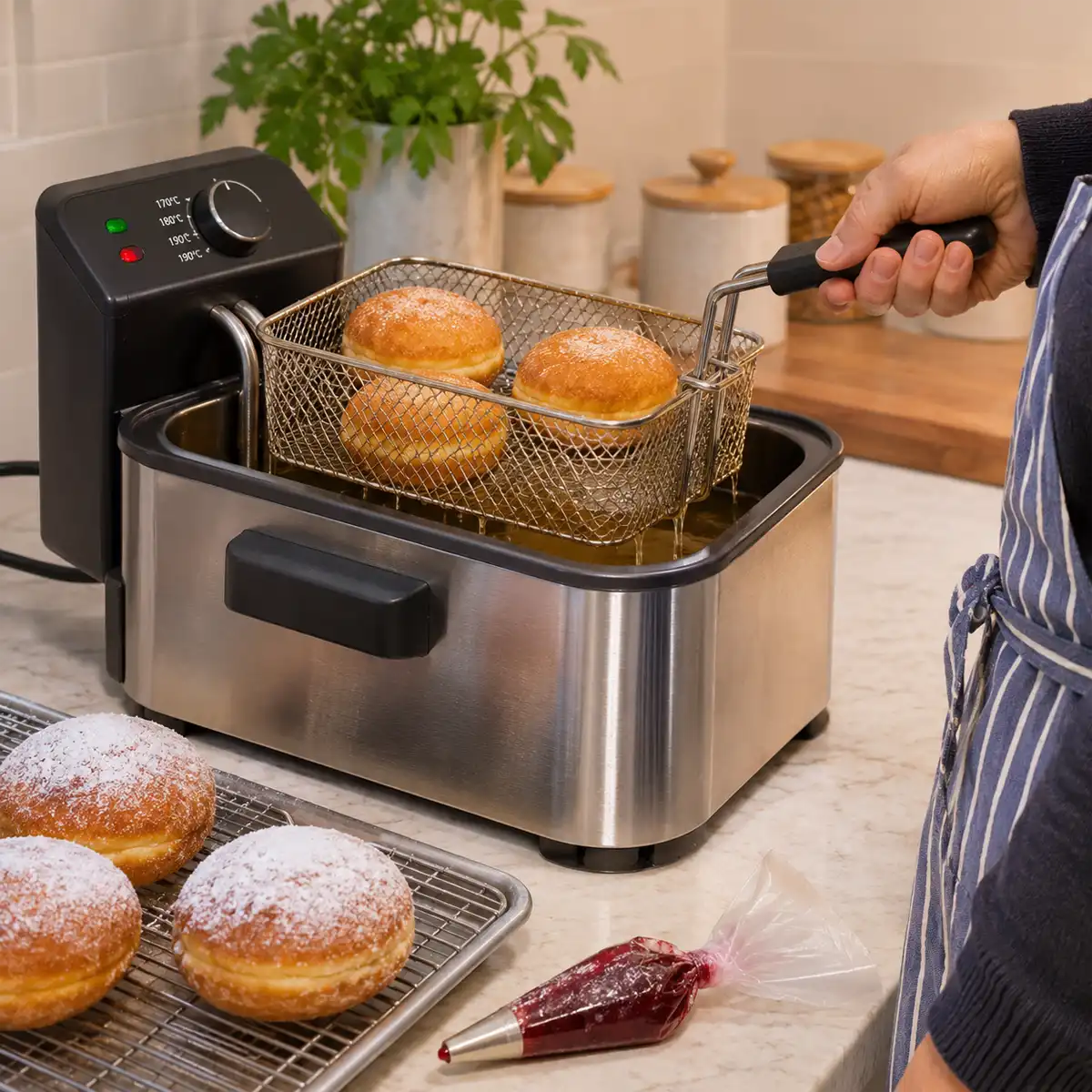
Frying sufganiyot at home, in order
Deep frying is the part of Hanukkah cooking that carries the most risk, so the order of work matters. This sequence puts the Jewish Chronicle method alongside the London Fire Brigade's deep fat fryer advice.
First, choose the vessel. The brigade suggests an electric deep fat fryer where possible, because it has automatic temperature controls. If a pan is used instead, it should never be more than one third full of oil. A pan that looks half empty before the doughnuts go in is the right pan.
Second, heat the oil with a thermometer in it. The recipe's 160°C is a measured figure, not a guess, and a sugar thermometer is the tool it names. If the oil smokes before it reaches that point, the heat is too high.
Third, make sure the dough is dry on the surface and fry in batches, as the recipe says, rather than filling the pan. The recipe gives 1 to 2 minutes a side, until golden. Stay with the pan for the whole time it is on the heat.
Fourth, lift each doughnut out onto absorbent paper, drain it briefly, then roll it in caster sugar while it is still warm, and fill it with about 1 tablespoon of jam.
Finally, turn off the heat as soon as the last batch is out and leave the oil to cool where it is, without carrying the pan. The brigade also warns that built-up fat and grease can ignite, so the cooker top needs a clean before the next night's frying.
How golden should latkes be
Aim for golden yellow or lighter. The Food Standards Agency's acrylamide advice says acrylamide forms when starchy foods such as potatoes and bread are cooked above 120°C, that longer cooking at higher temperatures forms more of it, and that home cooks should stop at a golden yellow colour.
The FSA guidance, first published on 9 January 2018, applies that colour rule to frying, baking, toasting and roasting starchy foods. The agency describes the page as information on the risks of acrylamide and how to reduce the chances of being harmed by it. For packaged foods such as frozen chips and roast potatoes, it says to follow the cooking instructions on the pack.
For latkes, that sets the target colour. A latke left in the pan until the edges turn dark brown has gone past the point the FSA describes. The Food for Life method stops at golden and crisp on each side and specifies a medium heat, which keeps it in line with that guidance. Pale gold, not mahogany, is the colour to take off the heat.
The same page also corrects older advice about storage. The FSA says it previously advised against keeping raw potatoes in the fridge, but that newer research found home fridge storage does not materially increase the potential for acrylamide to form. Raw potatoes can now go either in the fridge or in a cool, dark place.
Worth knowing: The first latkes were made from cheese in Italy, and potato took over only once potatoes became popular in Eastern Europe, according to J. The Jewish News of Northern California.
The sourcing for that story is Alix Wall's history of the latke, which also notes that schmaltz, rendered chicken fat, was the usual frying fat in Jewish kitchens, and that kosher rules against mixing meat and dairy made fried cheese pancakes impractical.
Allergens, cost and making ahead
The 14 allergens UK food businesses must declare are listed in the FSA's food allergy and intolerance advice, last updated on 7 August 2026. Against the 2 recipes above:
Latkes (Food for Life recipe): eggs, and cereals containing gluten through the matzo meal, which is made from wheat. Sour cream served alongside adds milk. Swapping in almond flour removes the gluten but adds tree nuts.
Sufganiyot (Jewish Chronicle recipe): cereals containing gluten in the plain flour, eggs, and milk in both the milk and the butter. Check the jam label too.
Frying oil: vegetable oil blends vary, so read the bottle if anyone at the table has an allergy.
Cost, priced on Ocado on 16 November 2026: British White Potatoes 1kg at £0.85, Brown Onions at £1.05 for 3 and Medium Free Range Eggs at £2.95 for 12. For the Food for Life batch that is about £0.64 of potato, £0.35 of onion and £0.49 of egg, so £1.48 for the fresh ingredients. The recipe asks for red-skinned potatoes, and we priced white ones. Matzo meal, baking powder and oil are not included, because Ocado did not show us those prices that day.
Making ahead: Food for Life says cooked latkes can be reheated in an oven at 180°C for about 10 minutes, which keeps the frying away from the hour guests arrive.
For the 8 nights from 4 December, the practical choice is simple. Shallow-fry latkes in a frying pan, stop them at golden yellow, and squeeze the grated potato dry first. Deep-fry sufganiyot in an electric fryer if you have one, or in a pan no more than one third full with a thermometer in the oil. If a pan catches fire, leave it alone, keep water away, get out and call 999.
Tell guests which allergens are in each dish. Anyone with coeliac disease or a diagnosed food allergy should rely on product labels and on advice from their GP or a registered dietitian. And if Hanukkah runs straight into a Christmas lunch in your house, our Christmas dinner timings plan picks up from there.