A sudden UK heatwave changes what your body needs from every meal. When the temperature pushes past 30C and the flat simply will not cool down, the smartest heatwave foods are the ones that hydrate you, gently replace the salts you sweat out and ask almost nothing of your oven. Here is the short answer before the detail. Lean on water-rich fruit and vegetables, keep cold protein to hand, build light no cook recipes, and sip fluids steadily across the day rather than gulping one rushed glass at lunch. The NHS advises most adults to aim for 6 to 8 cups or glasses of fluid daily, and hot weather lifts that need further. Food does real work here too, because foods such as cucumber and watermelon are roughly 95% water and count towards your intake alongside what you drink. This guide walks you through what to eat, three quick recipes you can make in minutes, and the warning signs that mean it is time to rest, rehydrate or call a GP. Stay cool, eat well, and let the kitchen stay off.
What to Eat in a Heatwave to Stay Cool and Hydrated
Eat little, often and cold. In a heatwave the best plate combines water-rich produce, a modest amount of cold protein and a pinch of salt to replace what you lose through sweat. Smaller, lighter meals also generate less metabolic heat than a heavy roast, which matters when your body is already working to cool itself.
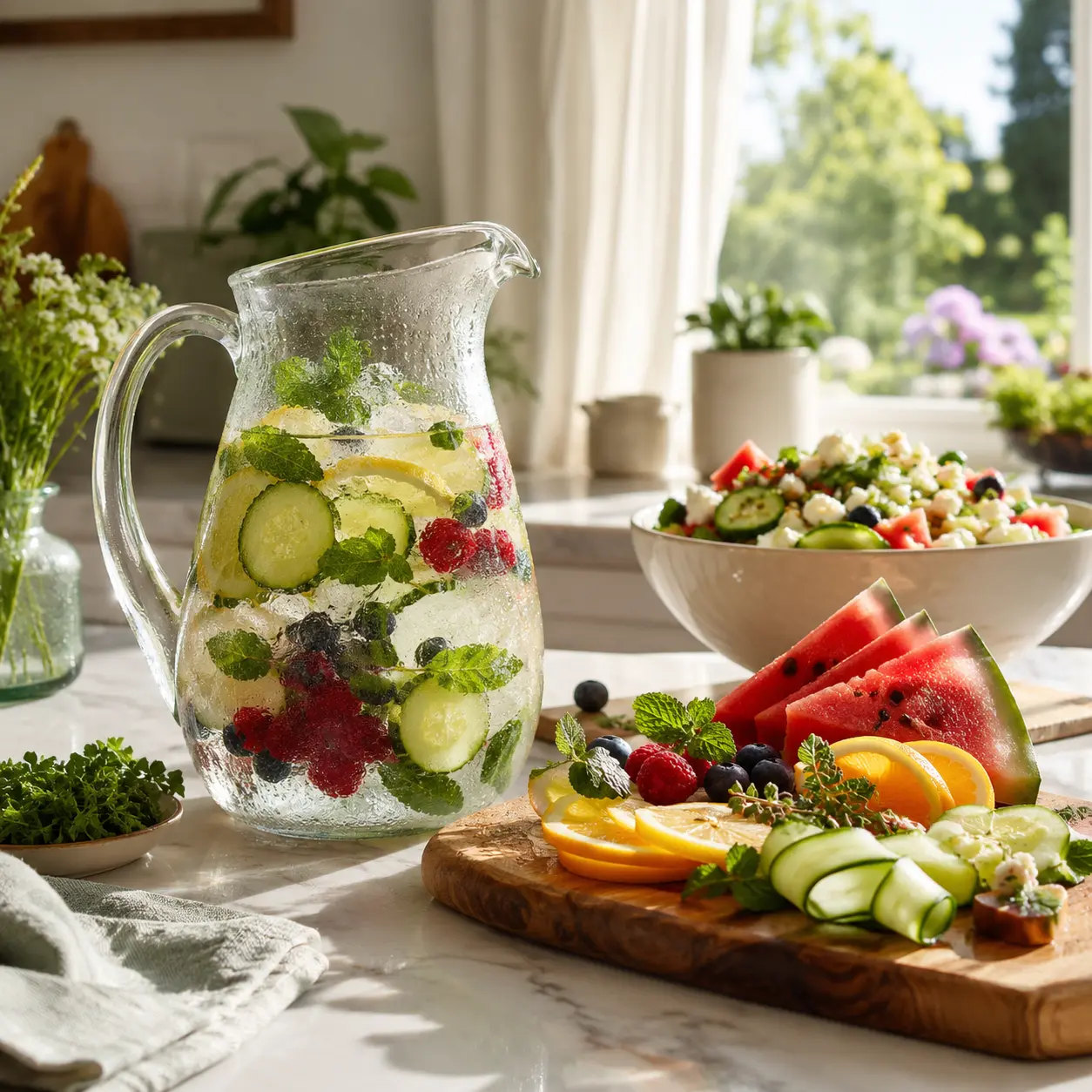
Start with hydration, because thirst is a late signal and many of us are mildly behind before we notice. Water remains the foundation, yet food carries a surprising share of daily fluid. Cucumber sits at about 96% water, watermelon close to 92%, and salad leaves such as rocket and lettuce are not far behind. Pair these with sources of potassium and sodium, the main electrolytes lost in sweat, so think tomatoes, new potatoes left to cool, natural yoghurt and a light scatter of salt. For gentle, flavour-led hydration through the day, our guide to cucumber, mint and ginger infused water gives easy combinations that make plain water far easier to drink.
Keep protein cold and simple. Tinned fish, pre-cooked chicken, hummus, feta, boiled eggs and tofu all sit happily in a fridge and need no heat. A 2024 review of hot-weather health guidance from UK public health bodies continued to stress fluid intake and light, regular meals for vulnerable groups, advice that holds for everyone during an extreme spell.
Best Hydrating Heatwave Foods to Beat the Heat Right Now
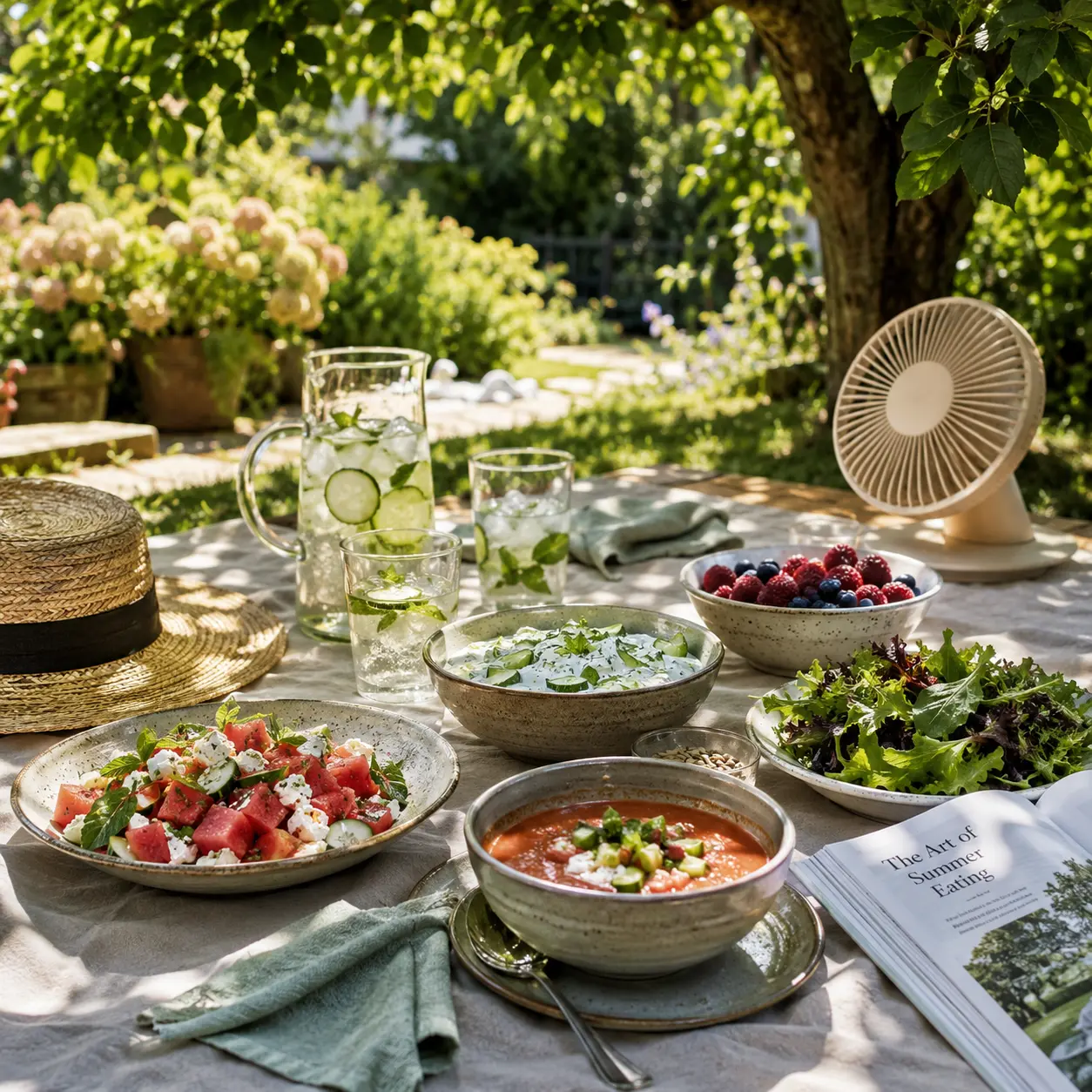
The top hydrating heatwave foods are cucumber, watermelon, strawberries, tomatoes and natural yoghurt. Each delivers a high water content plus useful nutrients, and all four of the plant options can be eaten raw within minutes. Together they cover fluid, fibre, potassium and a little natural sugar for quick energy.
Cucumber and celery bring volume and crunch for very few calories, which helps when appetite fades in the heat. Berries and watermelon offer fluid with polyphenols, plant compounds linked in observational research to lower inflammation, though that evidence is associational rather than proof of cause. Greek-style yoghurt adds protein and calcium and makes a cooling base for breakfast or pudding. Leafy salads provide nitrates and folate, while new potatoes, once cooled, form resistant starch that feeds beneficial gut bacteria. Frozen peas, grapes and banana coins straight from the freezer make instant snacks that double as edible ice.
Fun fact: A whole cucumber is roughly 96% water by weight, which means a single one can contribute almost as much fluid as a small glass of water while adding fibre and a little vitamin K.
Easy No Cook Recipes for Hot Summer Days
The best heatwave recipes need no hob, no oven and barely 15 minutes. Below are three that hydrate, satisfy and travel well for a picnic or a desk lunch. Each is built around store cupboard and fridge staples you can buy at any UK supermarket, and each offers a simple swap for common dietary needs.
Chilled cucumber and yoghurt soup. This takes roughly 10 minutes to prepare and needs no cooking at all, and it makes 2 generous bowls. Blend 1 large cucumber, 300g of natural yoghurt, 1 clove of garlic, a small handful of fresh mint and dill, the juice of half a lemon and 100ml of cold water until smooth, then season and chill. Each serving provides roughly 10g of protein and a large share of your fluid for that meal. For a dairy-free version, swap the yoghurt for an unsweetened coconut or soya alternative.
Rainbow chickpea and feta salad. Ready in about 12 minutes with no cooking, this makes 2 main portions or 4 sides. Toss 1 tin of drained chickpeas, 200g of halved cherry tomatoes, 1 diced cucumber, 100g of crumbled feta, a handful of rocket, a drizzle of olive oil and a squeeze of lemon. Each main serving offers roughly 14g of fibre and 18g of plant-led and dairy protein. For a vegan plate, replace the feta with marinated tofu or a few olives.
Frozen berry and banana yoghurt bark. Spread 400g of natural yoghurt on a lined tray, scatter over 150g of mixed frozen berries and a few banana slices, then freeze for about 3 hours and snap into shards. This makes 6 to 8 pieces and gives a cooling, calcium-rich treat with far less sugar than shop-bought ice lollies. If you need it nut-free and dairy-free, a fortified soya yoghurt works just as well. For more cold, balanced plates that hold up in the heat, our simple poke bowl guide offers another fridge-friendly template.
Foods and Habits to Avoid When the Temperature Soars
In a heatwave, go easy on alcohol, very salty processed meals, heavy fried food and a lot of caffeine. Alcohol and large amounts of caffeine act as mild diuretics, which can nudge you towards dehydration just when fluid balance matters most. Rich, hot meals also add to the heat your body must shed.
This does not mean a single coffee or a cold beer will harm a healthy adult, and current NHS guidance frames moderate caffeine as fine for most people. The sensible move is to match each alcoholic or caffeinated drink with water, and to favour lighter dishes during the hottest hours. Be wary of quick-fix cleanses marketed as a way to reset after a heavy weekend, because the liver and kidneys already manage that work and the products rarely add value. We weigh the actual evidence in our look at whether juice cleanses really work, which is worth a read before spending on any detox kit. A balanced plate beats a marketing claim every time.
Who Needs Extra Care in Hot Weather and When to Get Help
Some people face higher risk in a heatwave and need closer attention to food and fluid. Older adults, babies and young children, pregnant women, and anyone with heart, kidney or diabetes conditions are more vulnerable, as are people taking medicines such as diuretics. If that includes you or someone you care for, plan hydration deliberately and check in often.
The UK Health Security Agency has run its Heat-Health Alert system across the 2024 and 2025 summers, flagging spells when heat poses a real danger to health, and its advice centres on staying cool, drinking water regularly and keeping an eye on those at risk. Watch for warning signs of heat exhaustion such as heavy sweating, dizziness, headache, intense thirst and muscle cramps. Move the person somewhere cool, give fluids and help them rest. If symptoms do not improve within 30 minutes, or you see signs of heatstroke such as confusion, hot dry skin or a loss of consciousness, treat it as a medical emergency and call 999. Anyone on regular medication, managing a long-term condition, or unsure how a diet change might interact with their health should speak to a GP or a registered dietitian for personalised advice. No single food or drink can heat-proof the body, and individual needs vary, so steady, sensible habits matter more than any one superfood.
Your Simple Plan for Eating Well Through the Heat
Keep it light, cold and frequent. Build the day around water-rich fruit and vegetables, a little cold protein and a sensible pinch of salt, and let no cook recipes carry the load so the kitchen stays cool. Prepare a batch of the chickpea salad in the morning, freeze a tray of yoghurt bark for later, and keep a jug of infused water in the fridge so hydration is always within reach. Swap one hot, heavy meal for a chilled bowl and you will feel the difference by mid-afternoon. Think of your body in a heatwave like a car in slow traffic on a hot day. It runs best when you keep the fluids topped up and the load light. Stay cool, eat well, and check on the people around you who feel the heat most.