The question women typically ask first is the direct one. Does nutrition actually make a meaningful difference during perimenopause, or is most of what appears online selling supplements. The evidence-based answer is that diet does make a measurable difference to several of the symptoms associated with perimenopause, though the effect sizes are modest and the strongest data concern cardiovascular, bone, and body composition outcomes rather than the vasomotor symptoms (hot flushes, night sweats) that often prompt the search. This article works through perimenopause nutrition for UK readers from the evidence up, with sources cited in the same paragraph as each claim.
Perimenopause is the transition phase leading up to menopause, typically beginning in the mid-40s and lasting between four and eight years according to current NHS guidance. Hormonal changes, particularly declining estradiol, drive shifts in insulin sensitivity, bone mineral density, lipid profile, and body composition. Diet cannot replace the hormonal changes, and no food or pattern removes the need for considered clinical care where symptoms are disruptive. What diet can do is modify several of the metabolic consequences with reasonable supporting evidence.
The sources drawn on in this article are the NHS, the British Menopause Society, the British Dietetic Association, peer-reviewed systematic reviews, and randomised controlled trials from 2022 to 2025. Where evidence is strong, this will say so. Where it is preliminary, that will also be said. Before you make substantial dietary changes during perimenopause, speak to your GP or a registered dietitian, particularly if you are already taking hormone replacement therapy, thyroid medication, or treatment for osteopenia.
What perimenopause changes in the body that nutrition can influence
Perimenopause affects several measurable systems. Insulin sensitivity tends to decline as estradiol falls, which affects how the body handles carbohydrate-containing meals. Bone mineral density loss accelerates in the years surrounding the final menstrual period, with women losing up to 10 percent of bone mass across the five years around menopause according to a 2023 position statement from the British Menopause Society. LDL cholesterol and triglycerides tend to rise, while HDL drops modestly. Body composition shifts, with lean muscle mass declining and visceral adipose tissue increasing at a given body weight.
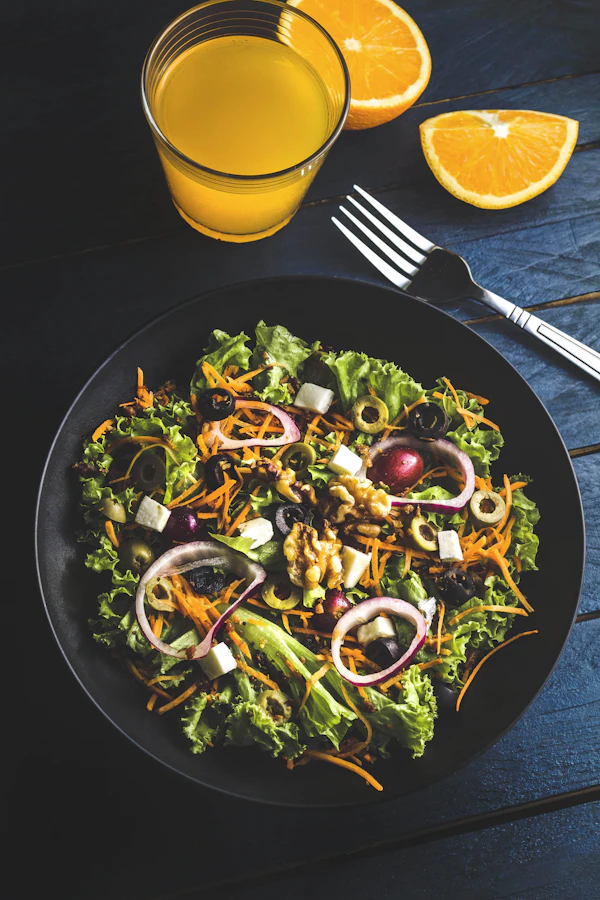
Nutrition interventions can modify each of these systems, and the evidence strength varies. Dietary patterns that emphasise vegetables, whole grains, pulses, oily fish, and olive oil, with limited ultra-processed food, have strong evidence for favourable lipid and cardiovascular outcomes. Adequate protein and calcium intake have strong evidence for supporting bone and muscle maintenance. The evidence for specific anti-inflammatory diets reducing vasomotor symptoms is weaker and largely observational. Distinguishing between these tiers matters, because the same dietary pattern is often marketed as a solution to all of them.
Why protein intake matters more after the mid-40s
Adult UK women are often under-consuming protein relative to the amount that evidence now supports for muscle maintenance. The UK Reference Nutrient Intake for protein is 0.75g per kilogram of body weight per day, which dates from a 1991 Department of Health report. More recent RCTs, including a 2021 systematic review in the American Journal of Clinical Nutrition, suggest that adults over 40 maintain muscle mass more effectively at intakes of 1.2 to 1.6g per kilogram per day, particularly when combined with resistance exercise. For a 65 kg woman, that is roughly 80 to 105g of protein per day, distributed across meals rather than concentrated in one.
Practical translation. A breakfast of 150g natural yoghurt with linseeds and berries contributes around 12g protein. A lunch built around 100g tinned salmon or 150g chickpeas contributes 18 to 25g. A dinner of 130g chicken breast or a 250g tofu portion contributes 30 to 35g. Between-meal snacks including a small handful of nuts, a hard-boiled egg, or a cup of kefir close the gap. This distribution matters because muscle protein synthesis responds most effectively to doses of 25 to 30g per meal.
Fun fact: A 2024 cohort study in the British Journal of Nutrition reported that women aged 45 to 60 who consumed 1.2g of protein per kilogram of body weight daily across five years showed 30 percent lower rates of loss of lean mass compared with those consuming the UK RNI.
Calcium vitamin D and bone mineral density
Bone mineral density loss in perimenopause has the strongest evidence-practice gap. The NHS currently recommends 700mg calcium per day for UK adults. The British Menopause Society 2023 position and the Royal Osteoporosis Society recommend that perimenopausal and menopausal women target 1000 to 1200mg per day, with the higher end applicable to those with established osteopenia. Food sources are the preferred route. A 150g portion of natural yoghurt provides around 200mg, 80g of sardines with their bones around 380mg, 100g of kale around 150mg, and a 200ml glass of calcium-fortified plant milk around 240mg.
Vitamin D is the companion nutrient and the one where UK deficiency is most common. Public Health England (now part of the UK Health Security Agency) advises adults to consider a 10 microgram (400 IU) daily supplement from October to March, when UK sunlight cannot drive adequate skin synthesis. Some dietitians in menopause clinics recommend year-round supplementation for perimenopausal women, particularly those with limited outdoor time, darker skin tones, or those who wear concealing clothing for cultural reasons. A 25-hydroxyvitamin D blood test via your GP can establish baseline status if this is a concern.


Phytoestrogens and what the evidence actually shows
Phytoestrogens are plant-derived compounds with weak estrogen-like activity, found primarily in soy foods (isoflavones), flaxseed (lignans), and some pulses. The evidence for phytoestrogens reducing vasomotor symptoms is mixed. A 2022 Cochrane Review concluded that phytoestrogen supplementation produced a small reduction in the frequency of hot flushes compared with placebo, but found no consistent effect on the severity of symptoms or on quality of life measures. The evidence for whole-food soy (tofu, tempeh, edamame, soy milk) is stronger than for isolated supplements.
Practical interpretation. If hot flushes are a primary concern, incorporating whole-food soy 3 to 4 times per week is reasonable and well-tolerated by most women. A 150g portion of tofu or 200ml of unsweetened soy milk are typical servings. Women with a personal or family history of estrogen-sensitive breast cancer should discuss soy intake with their oncology team before making deliberate increases, though current evidence from organisations including the World Cancer Research Fund does not support restricting moderate whole-food soy intake on cancer grounds.
Weight management insulin sensitivity and the role of ultra-processed food
Weight gain during perimenopause is genuinely more likely than at earlier life stages, and it is concentrated around the visceral abdomen, where metabolic risk is highest. The reasons include declining lean muscle mass (which lowers resting energy expenditure), shifts in fat distribution driven by estradiol decline, and often poorer sleep quality, which independently affects appetite hormones. Calorie restriction alone tends to perform poorly in this context because it accelerates the loss of lean mass that is already at risk.
A 2024 meta-analysis in Obesity Reviews examining dietary interventions in women aged 45 to 60 found that Mediterranean-pattern eating produced the most consistent improvements in body composition (reduced visceral fat, preserved lean mass) compared with low-fat or calorie-restricted comparators. Reducing ultra-processed food (as defined by the NOVA classification) was a significant independent factor. A 2019 NIH randomised controlled trial by Kevin Hall showed that an ultra-processed food diet led to 500 calories per day more consumption than a matched unprocessed diet at ad libitum intake, which is enough to account for 1 kg of weight gain per month without any other change.
The gut microbiome and its relevance in perimenopause
The gut microbiome appears to play a role in estrogen metabolism via a subset of gut bacteria collectively called the estrobolome, which produce beta-glucuronidase enzymes that deconjugate estrogen in the gut, allowing reabsorption. Higher microbiome diversity has been associated in preliminary research with more favourable circulating estrogen levels in perimenopausal women. The 2022 Sonnenburg laboratory RCT at Stanford, published in Cell, demonstrated that diets high in fermented foods increased microbiome diversity and reduced 19 inflammatory markers over 10 weeks.
The practical implication is that eating fermented foods regularly (kefir, natural yoghurt with live cultures, kimchi, sauerkraut, miso, kombucha) is reasonable and low-risk for most women, though the evidence that it directly reduces perimenopausal symptoms is preliminary rather than established. Combining fermented foods with 25 to 30g of fibre per day, the intake currently recommended by UK Scientific Advisory Committee on Nutrition, is the broader framework the evidence supports.
Alcohol caffeine and their specific perimenopausal effects
Alcohol intake has a measurable effect on perimenopausal symptoms. A 2023 review in Maturitas found that women consuming more than 7 units of alcohol per week reported 21 percent more frequent hot flushes and 18 percent poorer sleep quality than non-drinkers, with a dose-response relationship. UK Chief Medical Officer guidelines recommend no more than 14 units per week spread across at least three days, with several alcohol-free days. Caffeine evidence is more mixed. Caffeine before 2 pm is unlikely to affect sleep in most women, but afternoon or evening caffeine during perimenopause has been associated with both sleep disruption and hot flush triggering in observational studies.
A sensible starting point and what to discuss with your GP
The best-evidenced starting points for perimenopause nutrition in UK adults are a Mediterranean-pattern diet, protein at 1.2 to 1.6g per kilogram of body weight daily, 1000 to 1200mg calcium, a 10-microgram vitamin D supplement from October to March at minimum, 25 to 30g fibre daily, regular fermented foods, and alcohol intake limited to no more than 7 units per week. These recommendations are food-first, compatible with most existing UK dietary patterns, and sit alongside rather than against any clinical care you may be receiving. Book a 30-minute GP appointment or a private registered dietitian consultation to discuss whether hormone replacement therapy, bone density testing, or a lipid panel is appropriate for your situation. Nutrition is part of the picture. It is rarely the whole picture.
anti-inflammatory dinner recipes ready in 30 minutes and the gut-brain axis explained for curious UK readers