The 3 pm energy dip is a physiological event, not a personal failing. Blood glucose rises sharply after a high-glycaemic-index lunch, insulin follows, and the reactive hypoglycaemia that lands 90 to 180 minutes later is what you feel as the sudden need for a coffee and a biscuit. The practical question is whether changing the composition of lunch makes a measurable difference to afternoon energy. The evidence says yes, with clinically relevant effect sizes in people with insulin resistance or prediabetes and smaller effects in people with normal glucose handling. These low-GI lunch recipes are built for UK readers who want afternoon energy that holds from 2 pm through to dinner without a crash.
The glycaemic index (GI) ranks carbohydrate-containing foods from 0 to 100 based on how quickly they raise blood glucose compared with a reference food (pure glucose = 100). Low-GI foods (55 and below) digest more slowly, produce a smaller glucose peak, and a gentler return to baseline. High-GI foods (70 and above) produce a rapid spike-and-crash pattern. The glycaemic load (GL) accounts for both the GI and the carbohydrate content of a typical portion, which is why a watermelon (high GI, low GL) differs in practical terms from a bagel (high GI, high GL).
Four full lunch recipes follow, each with a named GI position, a physiological rationale, and UK supermarket ingredients. Before making substantial dietary changes, speak to your GP or a registered dietitian, particularly if you manage type 1 or type 2 diabetes, take insulin or oral hypoglycaemics, or are working with a clinician on insulin resistance or PCOS. Low-GI eating is not the same as low-carb eating, and the distinction matters for your medication regime.
What a low-GI lunch actually looks like on the plate
A low-GI lunch has four recognisable features. Protein at 25 to 35g per meal to slow gastric emptying and blunt the glucose response. Fibre at 8 to 12g, predominantly from pulses, whole grains, or vegetables, which physically slows carbohydrate absorption. A source of healthy fat (olive oil, avocado, nuts, oily fish) which further delays gastric emptying. And carbohydrate choices that are themselves low-GI: pulses (lentils GI 32, chickpeas GI 28), whole grains (pearl barley GI 28, steel-cut oats GI 42), or pasta cooked al dente (GI 45 to 50). The combination matters more than any single component. A 2022 systematic review in Nutrients confirmed that mixed meals are what move post-prandial glucose in real life, not isolated ingredients.
What this rule out, practically, in a British working week. A plain white bread sandwich (GI 75 to 85). A jacket potato with butter alone (GI 85). A rice-only sushi box (white rice GI 73). What it does not rule out is carbs. Al dente pasta salads, lentil bowls, wholegrain pitta fillings, and pearl barley soups all sit firmly in low-GI territory.
Puy lentil bowl with grilled halloumi and roasted peppers
Puy lentil bowl with halloumi is the lunch that reheats well on Thursday morning from Sunday's batch. Prep time is 10 minutes, cook time is 20 minutes, total time is 30 minutes, and it yields 3 portions. Drain 1 pouch (250g) of pre-cooked puy lentils into a large bowl. Roast 2 red peppers cut into strips and 1 sliced red onion with 1 tablespoon olive oil at 200°C for 18 minutes. Grill 180g halloumi sliced into 1 cm pieces on a dry griddle for 2 minutes each side. Combine the lentils, roasted vegetables, and halloumi with 2 handfuls of rocket, 1 tablespoon capers, and a dressing of 2 tablespoons olive oil, 1 tablespoon red wine vinegar, and 1 teaspoon wholegrain mustard.
GI and physiological rationale. Puy lentils have a GI of 30 and deliver 7g of fibre and 9g of protein per portion. Halloumi contributes 12g of complete protein and saturated fat, which slows gastric emptying. Peppers and rocket add fibre and micronutrients at negligible carbohydrate cost. The estimated meal GI is low (around 35) with an estimated glycaemic load of 10, which sits comfortably in the low-GL category. Vegetarian. For a vegan version, replace the halloumi with 150g of grilled firm tofu and add 1 tablespoon of tahini to the dressing for equivalent protein and fat.
Chickpea and tuna pasta salad with lemon and olive oil
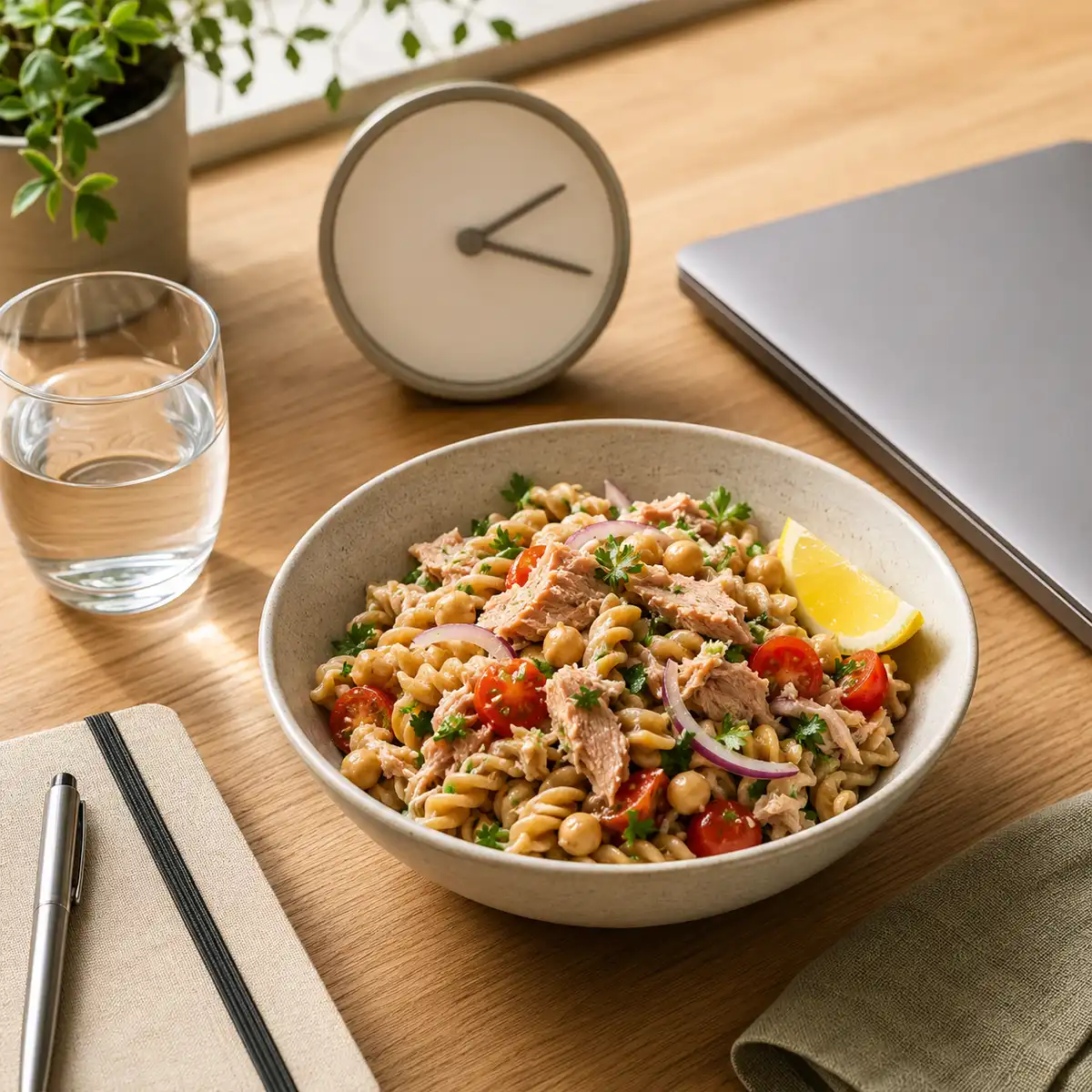
Chickpea and tuna pasta salad is the 12-minute lunch that beats the meal deal without requiring prep the night before. Prep time is 6 minutes, cook time is 9 minutes (in parallel with the other prep), total time is 12 minutes active, and it yields 2 portions. Cook 120g of wholegrain fusilli in boiling salted water for 9 minutes (al dente, not soft). Drain and rinse briefly under cold water. In a large bowl, combine the pasta with 1 tin (400g) of chickpeas (drained and rinsed), 1 tin (145g) of tuna in olive oil (drained), 150g cherry tomatoes halved, 1 handful of chopped parsley, 1 small finely sliced red onion, and a dressing of 3 tablespoons extra virgin olive oil, 2 tablespoons lemon juice, 1 crushed garlic clove, and a pinch of chilli flakes.
GI and physiological rationale. Wholegrain fusilli cooked al dente has a GI of around 42 compared to 65 to 75 for regular white pasta cooked soft. Chickpeas contribute 14g fibre and 18g protein per portion across both tins. Tuna adds 24g of complete protein and around 1.5g of long-chain omega-3. Olive oil and tomatoes supply monounsaturated fat and lycopene respectively. Estimated meal GI is low (around 38), estimated glycaemic load is 12. Naturally dairy-free. For a gluten-free version, replace the wholegrain fusilli with quinoa-corn pasta (Rummo or Doves Farm make reliable versions) or cooked quinoa.
Fun fact: A 2024 study in the American Journal of Clinical Nutrition using continuous glucose monitors found that swapping one high-GI lunch per day for a low-GI alternative reduced 24-hour glucose variability by 18 percent in adults without diabetes across a 4-week period.
Pearl barley and roasted vegetable bowl with feta and dill
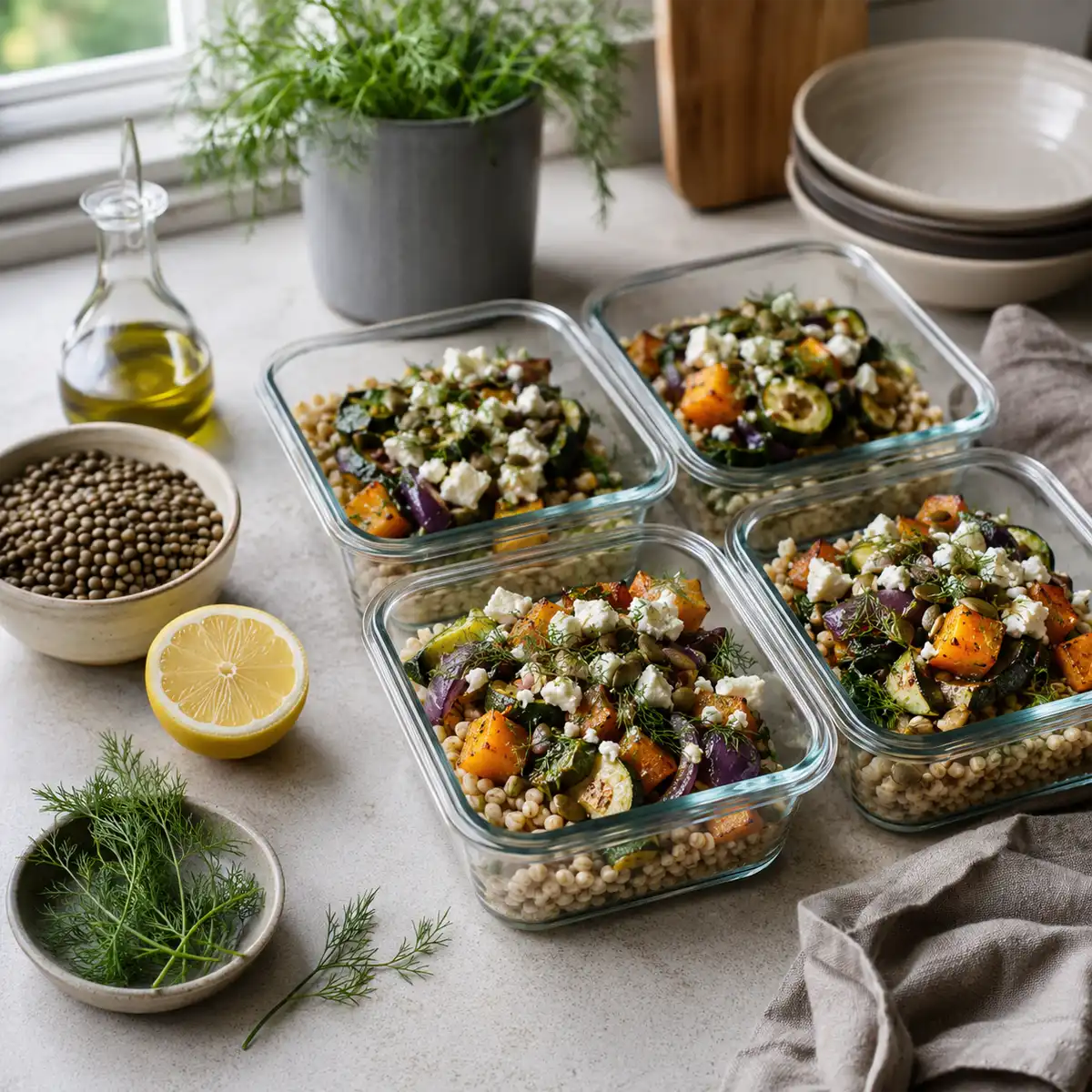
Pearl barley bowl is the Sunday-prep lunch that rewards batch cooking. Prep time is 8 minutes, cook time is 30 minutes (mostly hands-off), total time is 38 minutes, and it yields 4 portions. Cook 180g pearl barley in 600ml low-salt vegetable stock for 25 to 30 minutes until tender, then drain any excess. Meanwhile, roast 200g cubed butternut squash, 1 sliced courgette, and 1 sliced red onion with 2 tablespoons olive oil, 1 teaspoon cumin seeds, and a pinch of salt at 200°C for 25 minutes. Combine the cooked barley with the roasted vegetables, 120g crumbled feta, 2 tablespoons pumpkin seeds, 2 handfuls of baby spinach, and a dressing of 3 tablespoons olive oil, 2 tablespoons lemon juice, and 2 tablespoons chopped fresh dill.
GI and physiological rationale. Pearl barley has a GI of 28, one of the lowest GI values of any whole grain, and delivers beta-glucan at around 3g per portion. Beta-glucan has RCT evidence for slowing gastric emptying and reducing post-meal glucose peaks. Butternut squash is moderate-GI (around 50) but present in small enough portion to keep meal GL low. Feta and pumpkin seeds contribute protein and fat that further slow absorption. Estimated meal GI is low (around 40), estimated glycaemic load 11. Vegetarian. For a vegan version, replace the feta with a marinated tofu crumble and add 1 tablespoon of nutritional yeast. For a gluten-free version, substitute the pearl barley with quinoa (lower fibre, similar GI at 53, cooked in 15 minutes).
Smoked mackerel and butter bean salad on rye
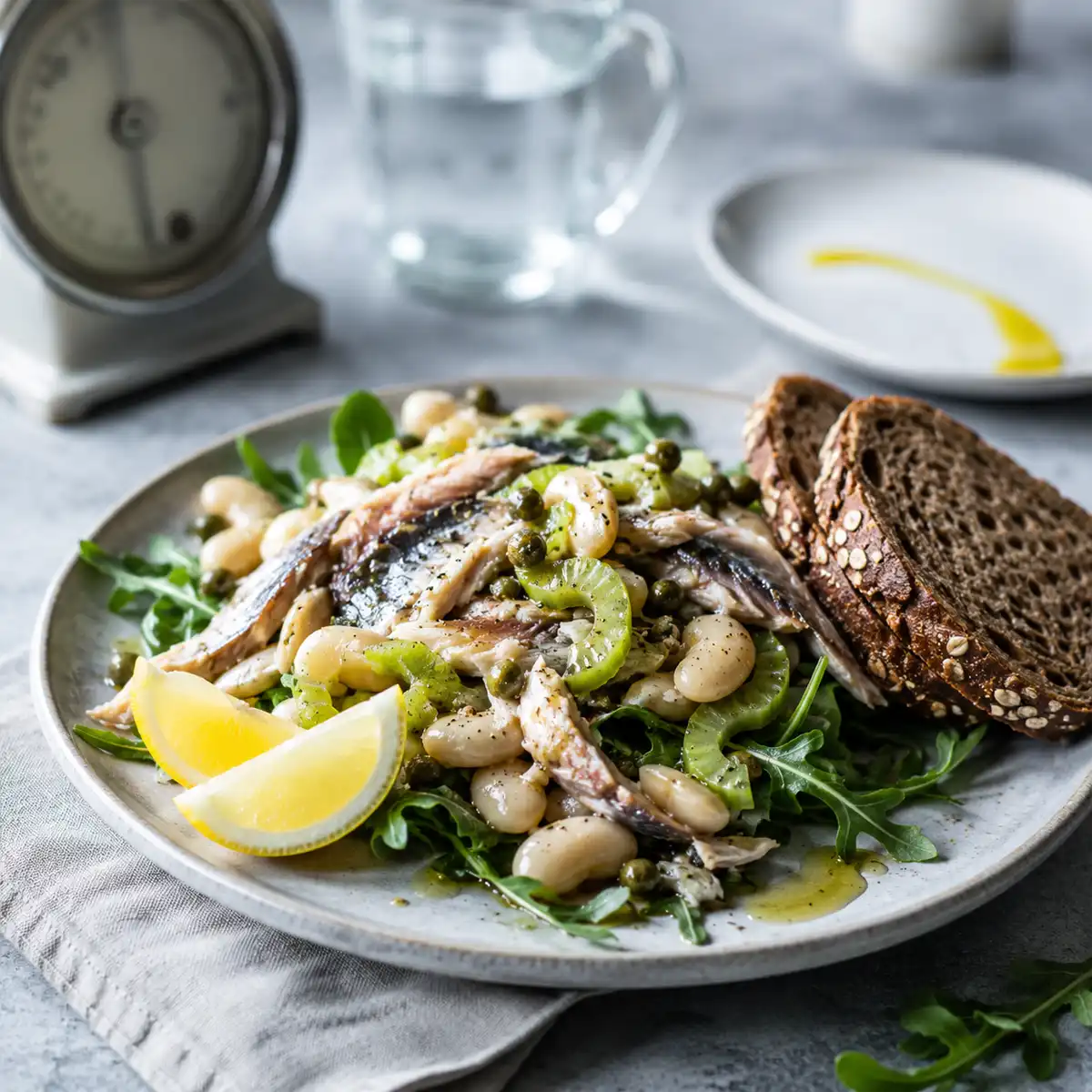
Smoked mackerel and butter bean salad is the assembly-only lunch that takes 8 minutes with no cooking. Prep time is 8 minutes, no cook time, total time is 8 minutes, and it yields 2 portions. Drain 1 tin (400g) of butter beans. In a bowl, combine the beans with 2 smoked mackerel fillets (roughly 200g total, skin removed and flaked), 1 finely chopped stick of celery, 1 finely sliced spring onion, 1 tablespoon of capers, 2 tablespoons of chopped fresh parsley, and a dressing of 2 tablespoons olive oil, 1 tablespoon cider vinegar, 1 teaspoon wholegrain mustard, and a grind of black pepper. Serve alongside 2 thin slices of seeded rye bread (do not mix the salad on the bread; the bread sits beside to keep the crunch).
GI and physiological rationale. Butter beans have a GI of 31 and supply 10g fibre and 14g protein per portion. Smoked mackerel provides roughly 25g of complete protein and 3g of long-chain omega-3 per portion, one of the best omega-3 densities per pound in any UK supermarket. Seeded rye bread has a GI of around 50, considerably lower than conventional sliced white bread (GI 75) or plain wholemeal (GI 71). Estimated meal GI is low (around 38), estimated glycaemic load 9. Dairy-free. For a fully gluten-free version, replace the rye with 2 oatcakes or a small portion of cooked quinoa salad on the side.
A weekly rotation pattern that holds up through Thursday
The realistic rotation. Sunday batch the pearl barley bowl, enough for 4 lunches. Monday eat portion one; Tuesday eat portion two; Thursday eat portions three and four (or freeze two for the week after). Wednesday assemble the chickpea and tuna pasta salad in 12 minutes. Friday assemble the mackerel and bean salad in 8. That gives you five low-GI lunches across the working week with roughly 90 minutes total cooking time, front-loaded into Sunday evening.
If continuous glucose monitoring is something you are working with clinically, lunches like these typically hold the post-meal peak within 1.5 to 2.5 mmol/L of baseline and return to baseline within 2 hours, compared with 3 to 5 mmol/L peaks and 4-hour return times on typical meal deal lunches. These numbers are indicative. Individual glucose responses vary significantly, which is why working with a registered dietitian or diabetes specialist nurse matters if glucose management is your specific goal.
Four lunches and a measurable afternoon result
Batch the pearl barley bowl on Sunday and lunch for three days is already handled. Slot in the chickpea tuna pasta mid-week when the fridge empties, and finish Friday with the 8-minute mackerel bowl. Across the working week, these low-GI lunch recipes deliver 25 to 35g of protein per meal, 8 to 14g of fibre, and an estimated meal GI in the 35 to 42 range, which is where afternoon energy sits steady rather than swinging. The result to look for is a 3 pm that feels like the middle of the day rather than the end of it. If you want concrete feedback, track your energy and mood at 2 pm, 3 pm, and 4 pm for the first fortnight. If the 3 pm dip flattens out, the lunches are doing what the physiology predicts.