After a heavy weekend, a late train dinner, or the kind of 3 pm slump that sends you towards the biscuit tin, a detox recipe can sound like a fresh start. The honest answer is simpler than the marketing. Food does not flush toxins from the body like a drain cleaner. Your liver, kidneys, gut, lungs and skin already handle waste removal every hour of the day. What the right recipes can do is help you feel steadier, less snacky and better nourished by giving you fibre, fluid, protein, minerals and colour in a form you actually want to eat.
That is the useful version of detox cooking: fast, bright, whole-food meals that support normal digestion and energy without fasting, powders or moral drama. If you want something lighter alongside them, the site already has detox water recipes with cucumber, mint and ginger, but the real work still happens on the plate. The NHS Eatwell Guide says fruit and vegetables should make up just over a third of what we eat, while the British Dietetic Association’s August 2025 detox factsheet reminds readers that no single food or drink can do a magic job for the body. These 10-minute ideas sit in that sensible middle ground. They are fresh, satisfying and built for real UK kitchens.
Are 10-Minute Detox Recipes Actually Good For You
10-minute detox recipes can be good for you when they mean quick meals built around vegetables, pulses, whole grains, yoghurt, nuts, seeds and water-rich foods. They become less useful when they replace meals with juice, remove major food groups or promise rapid weight loss.
The British Dietetic Association states in its 2025 detox factsheet that detox teas, pills and drinks cannot outperform the body’s own waste-removal systems. That does not make fresh food pointless. It means the real benefit comes from ordinary nutrition: fibre for bowel regularity, protein for fullness, potassium-rich fruit and vegetables for balance, and enough fluid to support normal hydration.
Think of these recipes as a reset of habits, not a cleanse of organs. A bowl of chickpeas, cucumber, herbs and lemon will not “detox” the liver, but it will give you plant protein, resistant starch, vitamin C and crunch. That is a better promise, because it is one your lunch can keep. For the bigger picture on detox claims, our guide to detox diets explained without the wellness hype breaks it down.
What Makes A Detox Recipe Filling Instead Of Flimsy
A filling detox recipe needs protein, fibre, fat and flavour in the same bowl. Leave out any one of those and you get the classic wellness snack problem: pretty food that leaves you hungry 40 minutes later.
The NHS fibre guidance, reviewed in 2026, says adults should aim for 30g of fibre a day, while many adults average closer to 20g. A 10-minute meal can help close that gap if it includes beans, lentils, oats, wholegrain bread, berries, seeds or vegetables with their skins. Protein matters too. Greek yoghurt, tofu, eggs, tinned fish, chickpeas and lentils slow the rush towards the next snack.
A 2024 BMJ umbrella review linked higher ultra-processed food exposure with several adverse health outcomes across observational evidence, although it could not prove every cause. For a busy cook, the practical takeaway is modest: more whole-food meals, fewer snack-food defaults, and no need to turn dinner into a purity test.
Flavour is the final anchor. Lemon zest, ginger, chilli, mint, coriander, garlic, toasted seeds and good olive oil make healthy food feel generous. If your goal is a steadier gut-friendly week, this sits neatly beside our guide to a high-fibre detox diet for a gut reset. Nobody sticks with food that tastes like punishment.
Quick Green Lentil Detox Bowl With Lemon And Herbs
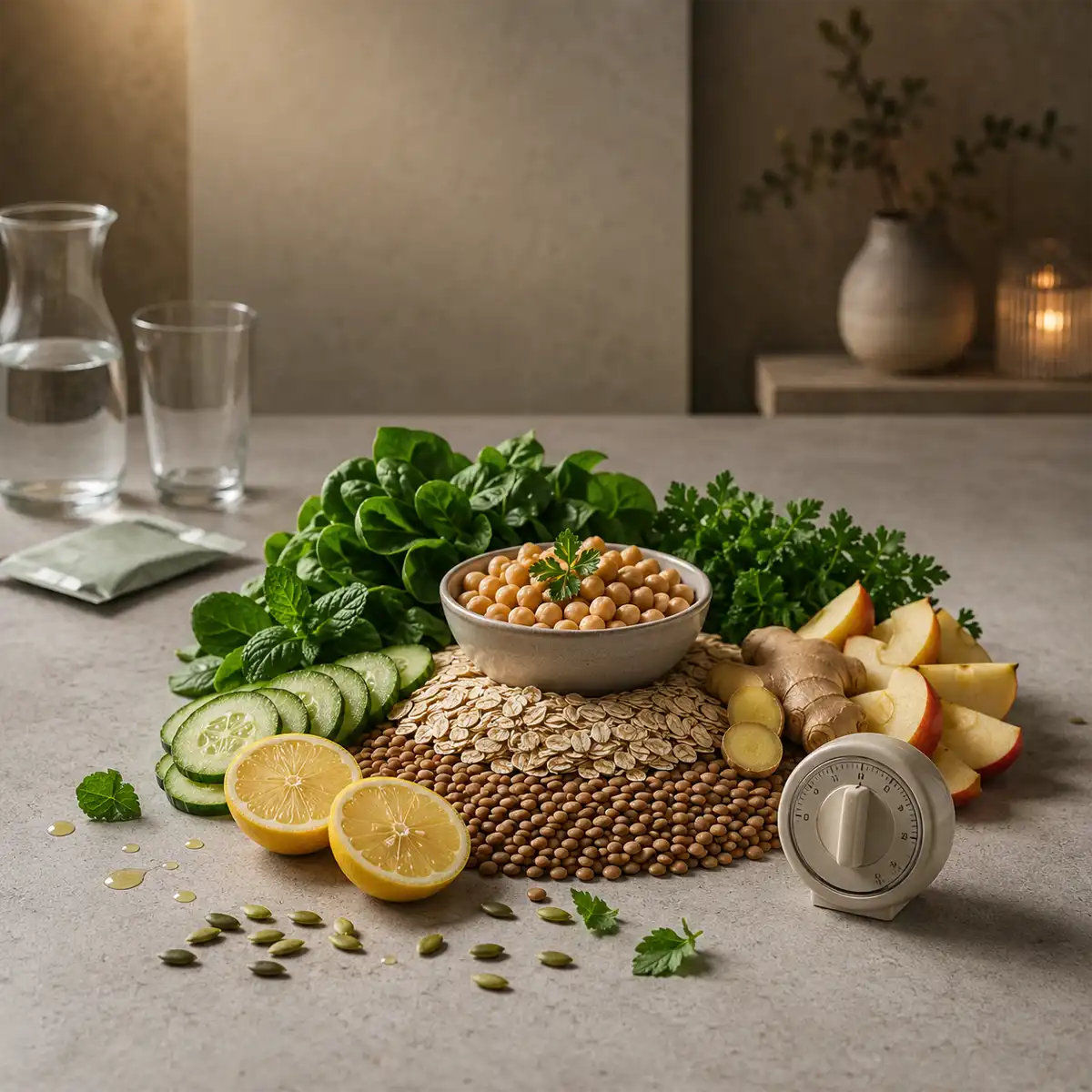
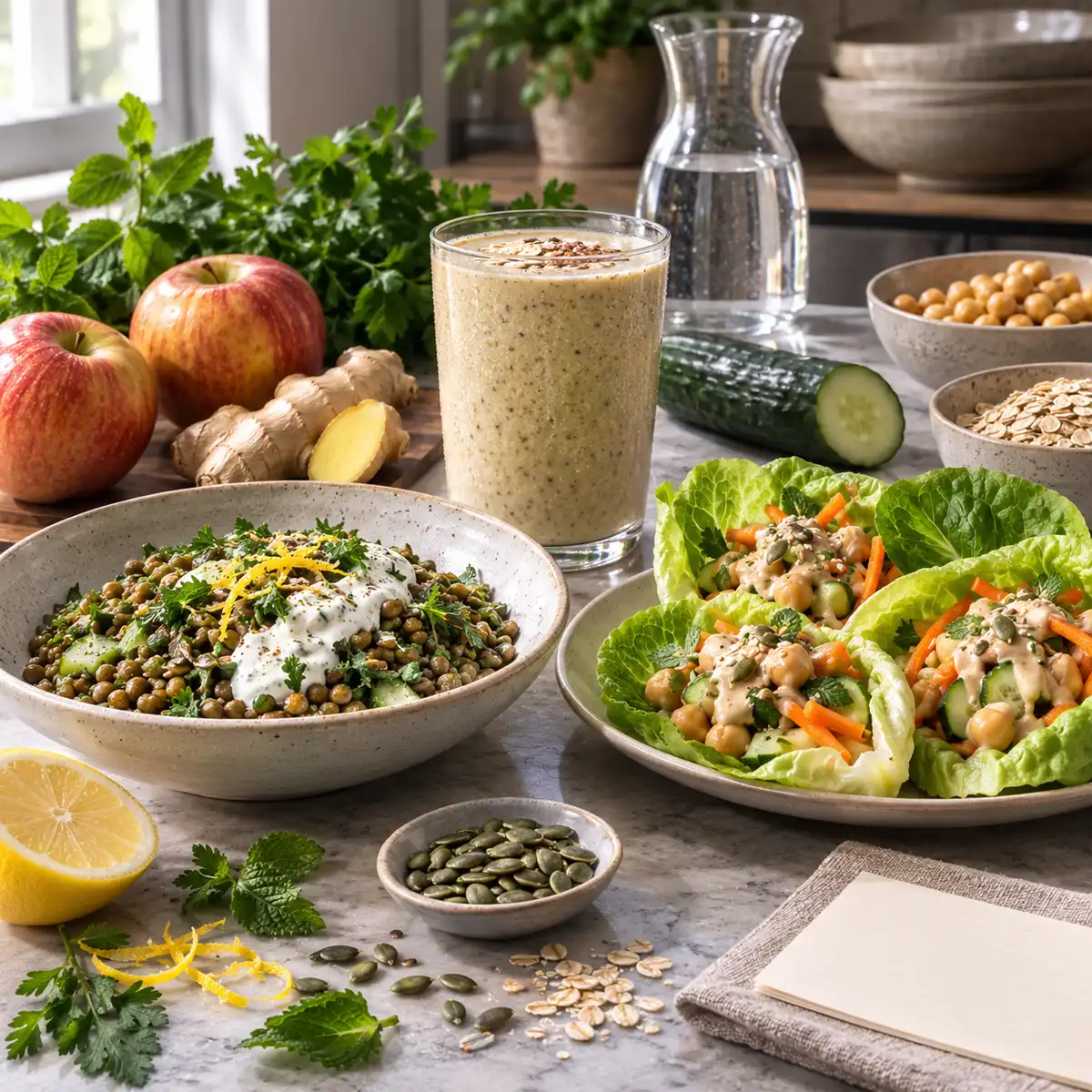
This green lentil detox bowl takes about 10 minutes to prepare, needs no cooking if you use a pouch of cooked lentils, and makes 2 generous portions. You will need 250g cooked green lentils, half a cucumber, 2 handfuls of rocket, 1 grated carrot, 1 sliced spring onion, 2 tablespoons plain Greek yoghurt or dairy-free yoghurt, the juice of 1 lemon, 1 tablespoon olive oil, chopped parsley and mint, and a pinch of black pepper.
Rinse the lentils, then toss them with cucumber, carrot, spring onion and herbs. Whisk the yoghurt with lemon juice, olive oil and pepper until it tastes sharp and creamy. Spoon it over the lentils and finish with rocket. For a dairy-free version, use unsweetened soya yoghurt. For extra crunch, add 1 tablespoon pumpkin seeds.
Each portion provides plant protein, fibre, folate and magnesium from the lentils, plus vitamin C from the lemon and herbs. The WHO’s 2026 healthy diet factsheet recommends a variety of whole grains, pulses, fruit and vegetables as the foundation of healthy eating, and this bowl fits that pattern without pretending to be medicine.
Apple Ginger Oat Smoothie That Eats Like Breakfast
An apple ginger oat smoothie works best when it behaves like breakfast, not a glass of sweet juice. This takes 5 minutes, makes 1 large serving, and needs 1 apple, 3 tablespoons oats, 150g plain yoghurt or fortified soya yoghurt, 100ml milk or unsweetened oat drink, 1 teaspoon grated ginger, 1 tablespoon ground flaxseed, cinnamon and a squeeze of lemon.
Blend everything until thick, then let it sit for 2 minutes so the oats soften. If you want it colder, add ice. If you want it more spoonable, reduce the milk and eat it from a bowl with berries. The texture should be creamy, not watery, with the ginger warming the back of the throat.
The NHS Eatwell Guide says fruit juice and smoothies should be limited to 150ml a day because of free sugars. This recipe uses whole apple, oats and flaxseed to keep more fibre in the glass. It is still best treated as a meal, not something to sip all morning.
Fun fact: Oats contain beta-glucan, a soluble fibre that turns creamy when soaked and helps explain why porridge feels more satisfying than many dry cereals.
Crunchy Chickpea Lettuce Cups For A Light Lunch
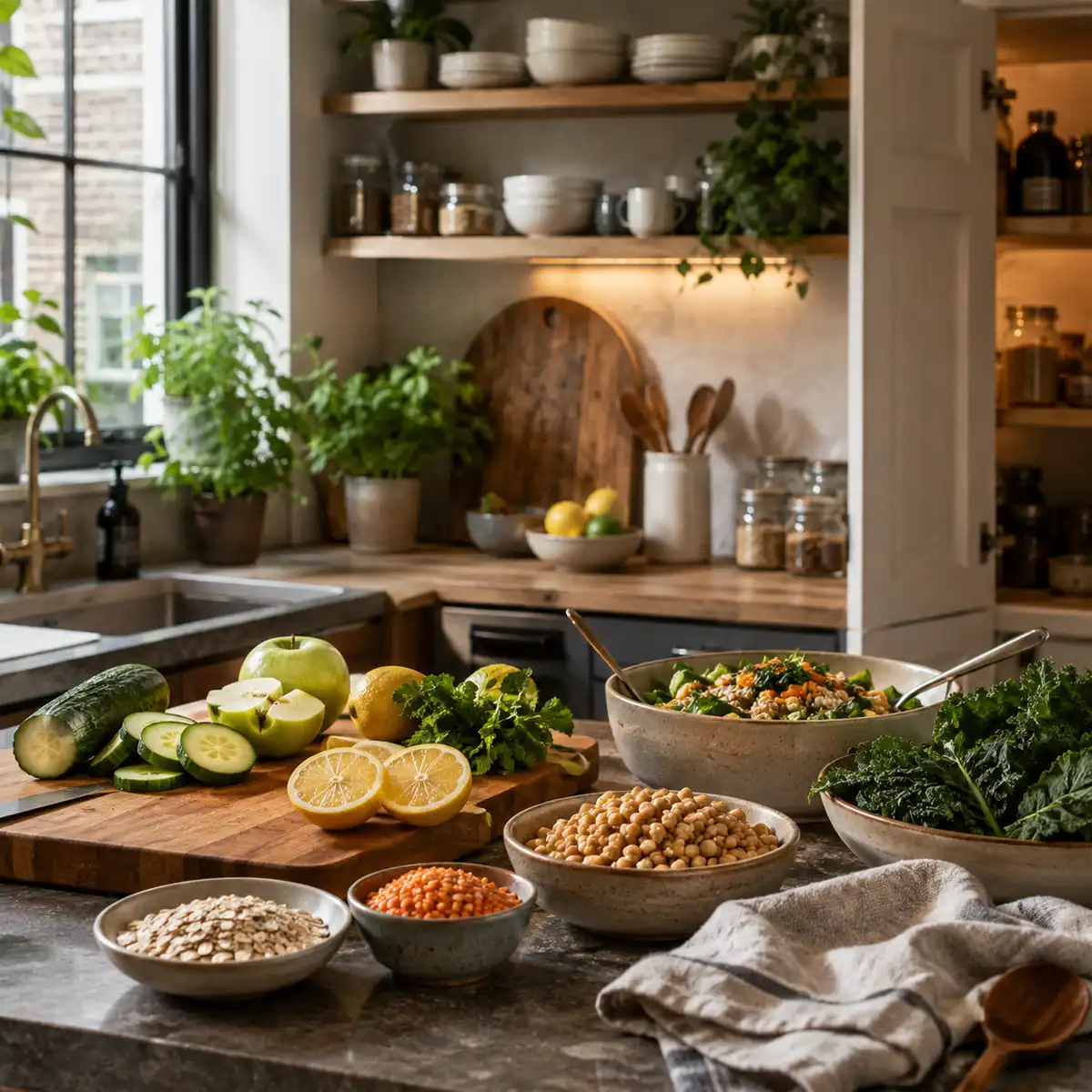
Crunchy chickpea lettuce cups take 10 minutes, make 2 lunch portions, and bring the sunny mess of a mezze plate without needing a hob. Mash 1 tin of drained chickpeas with 1 tablespoon tahini, 1 tablespoon lemon juice, 1 teaspoon Dijon mustard, grated carrot, chopped cucumber, chopped coriander and a little smoked paprika. Spoon the mixture into little gem lettuce leaves and add tomatoes or pickled red onion.
For gluten-free readers, these are naturally gluten-free if the mustard is suitable. For nut-free homes, tahini is seed-based, but check labels if sesame is a concern. For more protein, add a chopped boiled egg or a few flakes of tinned salmon.
Chickpeas bring fibre and plant protein, while tahini adds unsaturated fat and a nutty depth. The meal is light, but it should not feel thin. That balance matters for people searching for healthy recipes after overdoing rich food. The answer is not less food. It is better-built food.
Who Should Be Careful With Detox Recipe Plans
Detox recipe plans need caution if they involve fasting, severe calorie restriction, laxative teas, supplements or cutting out wheat and dairy without a medical reason. Pregnant women, people with diabetes, anyone with a history of eating disorders, people taking medication and those with kidney disease should seek personalised advice before making major diet changes.
The BDA’s 2025 detox factsheet warns that fasting can leave people tired, dizzy and short of nutrients. It also notes that cutting out wheat or dairy can remove useful nutrients unless they are properly replaced. If bloating, fatigue or skin changes are persistent, it is wiser to speak to a GP or registered dietitian than to chase a stricter cleanse.
A gentle recipe reset should make life easier. It should not create fear around bread, dairy, fruit or family meals.
How To Use These Recipes For A Better Week
The best way to use 10-minute detox recipes is to rotate them into normal meals. Start with one high-fibre breakfast, one colourful lunch and one water-rich snack each day, then build from there. That approach is more realistic than trying to overhaul everything by Monday morning. For a full week mapped out, follow our 7-day healthy eating plan for steady energy.
For example, make the lentil bowl for lunch, keep the apple ginger smoothie for a busy breakfast, and use the chickpea cups when dinner is late. Add water, tea or sugar-free drinks across the day. The NHS suggests 6 to 8 cups or glasses of fluid daily for most adults, with needs varying by heat, exercise and health.
There is no need to be perfect. A good detox-style recipe is simply food that helps your body do its ordinary work while keeping you fed, calm and interested. Start with the bowl that sounds most delicious, then repeat it until it becomes part of your week. For lunches that go even deeper on slow-release energy, try the site’s low-GI lunch recipes for steady afternoon energy next.