Embarking on a journey to unveil the secrets behind a radiant complexion, it becomes evident that the cornerstone of vibrant skin lies in understanding and maintaining the perfect pH balance. In the vast universe of skincare, where every drop of serum and swipe of toner carries the potential to transform, the concept of pH balance emerges as a beacon of hope for those seeking the elusive glow of healthy skin. But what is pH balance, and why does it wield such power over our skin's health and appearance?
The Basics of Skin pH and Its Importance
At the heart of this exploration lies the simple, yet profound concept of pH balance. The term "pH" stands for "potential hydrogen," a measure that gauges the acidity or alkalinity of a substance on a scale from 0 to 14. This scale is not just a remnant of our high school chemistry classes but a critical indicator of health and vitality in our skin. The skin, our body's largest and most visible organ, operates optimally within a slightly acidic range, typically between 5 and 6 on the pH scale. This delicate balance is the skin's first line of defense, a protective barrier known as the acid mantle.
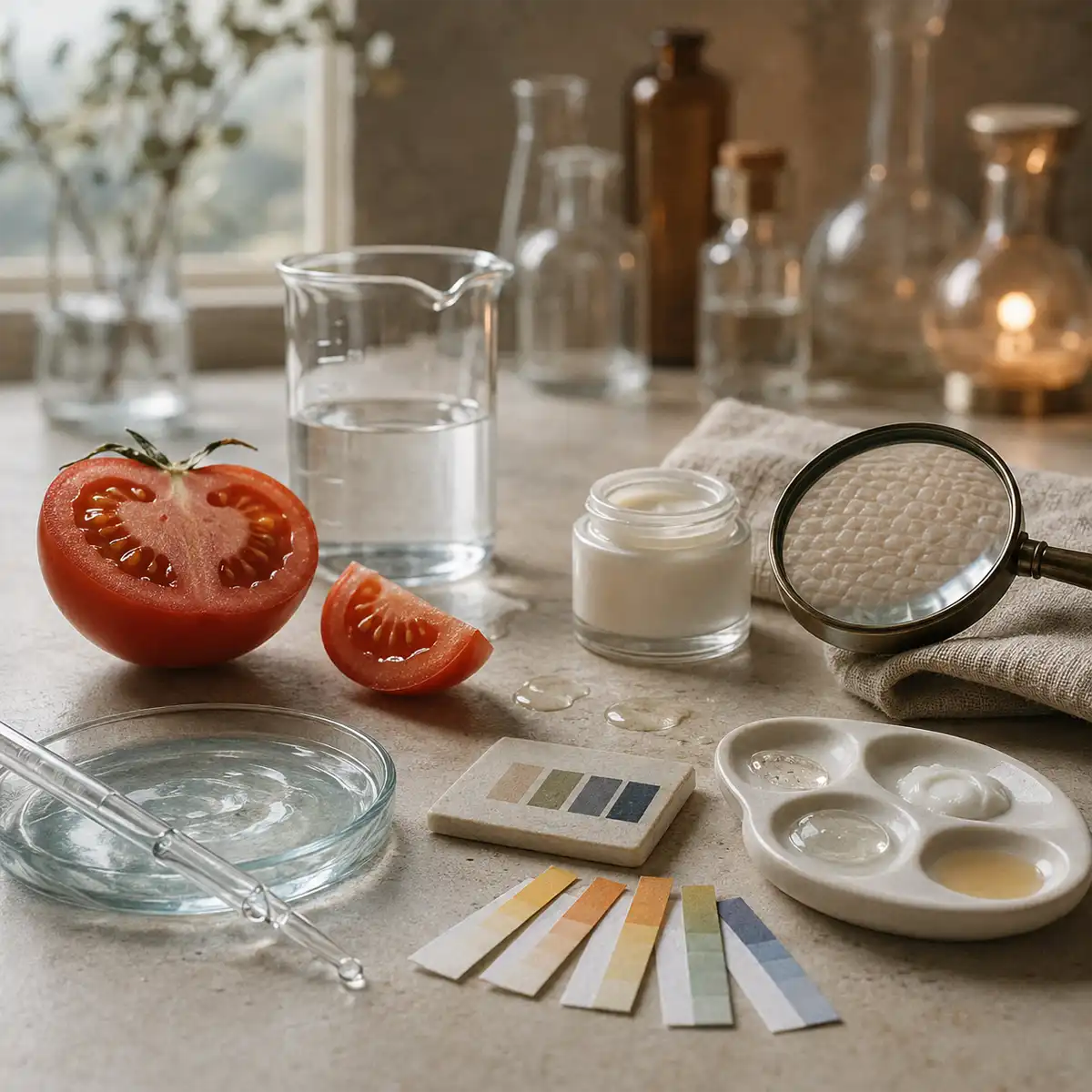
Fun Fact: Did you know that the skin's pH is comparable to that of a ripe tomato? This acidity is crucial for warding off unfriendly bacteria while keeping the skin supple and healthy.
How pH Affects Your Skin's Natural Barrier
Imagine a robust castle wall, shielding the kingdom within from external threats. This is the role of your skin's natural barrier. When the pH balance is maintained, the skin barrier functions effectively, retaining moisture and protecting against irritants, pollutants, and microorganisms. However, when the pH scale tips too far in either direction, the barrier weakens. An alkaline imbalance (a higher pH) can leave the skin dry, sensitive, and more susceptible to aging and irritation. Conversely, excessive acidity can lead to inflammation and breakouts. Thus, balancing the skin's pH is akin to fortifying its defenses, ensuring it remains resilient against assaults from both the environment and the products we use.
Identifying Signs of pH Imbalance
Recognising the signs of a pH imbalance is akin to understanding the language of your skin. When the balance is disturbed, the skin communicates through dryness, irritation, and an increase in acne or sensitivity. These symptoms signal a cry for help, indicating that the protective barrier has been compromised. On the other hand, when the skin's pH is balanced, it thrives, displaying smoothness, softness, and a natural glow devoid of tightness, flaking, or discomfort. Therefore, paying close attention to these signs is essential for anyone wishing to maintain or restore their skin's health and radiance.
Expert Tips for Testing Your Skin's pH Level
Embarking on the quest to balance your skin's pH begins with understanding where you currently stand. While there are professional tests available, a simple at-home litmus test can offer a glimpse into your skin’s pH level. These test strips are applied to the skin, providing a colour-coded result that can be compared against a pH scale. Though not as precise as laboratory tests, they serve as a valuable tool in gauging your skin's health and guiding your skincare choices towards a more balanced regimen.

Choosing the Right Skincare Products for pH Balance
Navigating the sea of skincare products requires a discerning eye, particularly when seeking to maintain pH balance. Opt for gentle cleansers that respect your skin's natural acidity, avoiding those with high alkalinity that can strip the skin of its natural oils. Ingredients matter immensely; look for products enriched with hyaluronic acid, ceramides, and alpha-hydroxy acids that support the skin’s barrier and hydration levels. Remember, the goal is to choose formulations that harmonize with your skin's innate pH, fostering an environment where radiance and health flourish.
Lifestyle Changes for Better pH Balance
The journey to balanced skin extends beyond topical treatments, touching upon the very lifestyle we lead. Simple shifts, such as filtering hard water, can make a profound difference, reducing the skin's exposure to alkaline minerals that disrupt pH levels. Embrace a diet rich in fruits and vegetables, which can influence the body's internal and external pH balance, promoting skin that not only looks healthy but truly is. Moreover, stress management and adequate hydration play pivotal roles, underscoring the holistic nature of skin health.
Success Stories: Transformations Through pH Balance
The power of maintaining skin pH is not merely theoretical but is evidenced by countless success stories. Individuals who have tailored their skincare routines to address pH balance often report significant improvements – reduced inflammation, enhanced moisture retention, and a noticeable glow that mirrors the internal health of the skin. These testimonies serve as a beacon of hope, illustrating the transformative potential of embracing pH balance in skincare.
Conclusion
The exploration of pH balance in skincare unveils a fascinating intersection between science and beauty. It's a journey that transcends mere cosmetic concerns, delving into the essence of what it means to nurture and protect our skin. By understanding the pivotal role of pH balance, we equip ourselves with the knowledge to make informed decisions about our skincare, lifestyle, and beyond. The result? A complexion that radiates health, resilience, and vitality. In the end, achieving and maintaining the optimal pH balance is not just about enhancing our external appearance; it's about fostering well-being, confidence, and harmony within our skin.
FAQs
Can diet affect my skin's pH balance? Yes, a diet rich in fruits and veggies can help maintain pH balance.
Are all acidic products bad for my skin? Not all, some like hyaluronic acid, are beneficial for hydration.
How often should I test my skin's pH? Testing every few months can help monitor changes and needs.
Can stress affect my skin's pH level? Yes, stress can disrupt your skin's balance, leading to issues.
Is hard water bad for my skin's pH? Hard water can raise skin pH, leading to dryness and irritation.