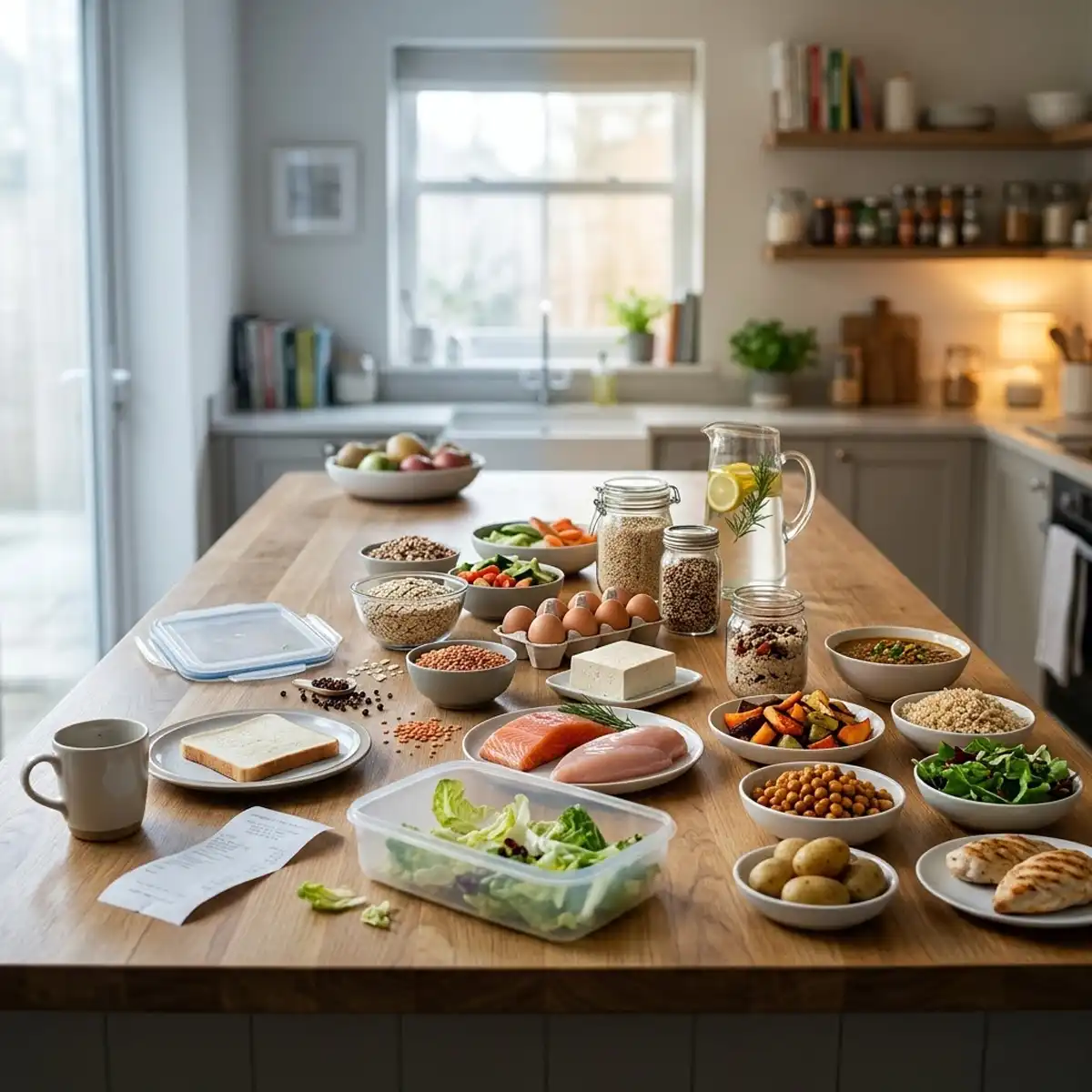
A good healthy eating plan should make your week feel easier by Wednesday, not leave you counting almonds and apologising for toast. If your energy dips after lunch, your dinners feel improvised, or your breakfast is really just coffee with hope, a 7-day plan can help. The point is not detox theatre. The point is rhythm: fibre at breakfast, protein at each meal, colourful plants across the day, enough fluid, and dinners that become useful leftovers.
This plan follows the spirit of the NHS Eatwell Guide, which says balance can happen over a day or even a week rather than in every single meal. It also respects the BDA’s 2025 warning that detox diets overpromise and often rely on restriction. If you want a more reset-focused version, the existing 7-day detox meal plan using British supermarket staples pairs naturally with this steadier everyday plan. The meals below are built from UK supermarket staples, with pulses, oats, vegetables, yoghurt, fish, eggs, tofu, chicken, whole grains and olive oil doing the quiet work. Use it as a flexible template, not a test.
What Should A 7-Day Healthy Eating Plan Include
A 7-day healthy eating plan should include vegetables and fruit, wholegrain or higher-fibre carbohydrates, protein foods, dairy or fortified alternatives, unsaturated fats and enough drinks. It should also include meals you genuinely like, because a plan that ignores appetite rarely lasts.
The NHS Eatwell Guide recommends at least 5 portions of varied fruit and vegetables a day, starchy foods as just over a third of intake, and some beans, pulses, fish, eggs, meat or other proteins. The WHO’s 2026 healthy diet guidance describes healthy diets through adequacy, balance, moderation and diversity. In a weekly plan, that means spreading nutrients across the week rather than chasing one perfect day.
A 2024 BMJ umbrella review associated higher ultra-processed food exposure with poorer health outcomes across multiple observational meta-analyses. That does not mean every packaged food is harmful, but it does support a weekly plan built around oats, potatoes, pulses, vegetables, fish, eggs, yoghurt and simple cooked meals.
For steady energy, each meal needs a slow-release base, a protein anchor and a plant-rich side. Porridge with berries and seeds does that. So does lentil soup with wholegrain toast, tuna with a skin-on potato, or tofu with brown rice and greens.
How This Plan Keeps Afternoon Energy Steadier
This plan supports steadier afternoon energy by pairing fibre-rich carbohydrates with protein and healthy fats. That combination slows digestion compared with sugary snacks alone and can make lunch feel more satisfying.
NHS fibre guidance says adults should aim for 30g of fibre a day, yet many average about 20g. Fibre-rich meals include oats, wholemeal bread, beans, lentils, chickpeas, vegetables, fruit, nuts and seeds. These foods also bring magnesium, potassium, folate and polyphenols, which belong in a normal healthy diet rather than a supplement routine.
If you usually crash at 3 pm, look first at lunch. A plain salad with no carbohydrate or protein is likely to fail you. A lentil and tomato soup with wholegrain toast, or a chicken and avocado wrap with carrot sticks, gives your body more to work with. For more ideas in this lane, the site’s low-GI lunch recipes for steady afternoon energy are built around the same principle.
The 7-Day Plan For Breakfast Lunch And Dinner
This 7-day plan gives you a practical structure for breakfast, lunch and dinner. Swap days around as needed, repeat meals you like, and use leftovers rather than cooking from scratch every night.
Day 1 starts with porridge, berries, ground flaxseed and yoghurt. Lunch is lentil soup with wholegrain toast. Dinner is lemon chicken or tofu with roasted carrots, broccoli and brown rice.
Day 2 starts with scrambled eggs or tofu on wholegrain toast with tomatoes. Lunch is chickpea, cucumber and feta salad, or a dairy-free version with olives. Dinner is salmon, mackerel or butter beans with new potatoes and greens.
Day 3 starts with overnight oats, grated apple, cinnamon and pumpkin seeds. Lunch is leftover rice bowl with chicken, tofu or beans. Dinner is vegetable chilli with kidney beans and a spoon of yoghurt.
Day 4 starts with Greek yoghurt or fortified soya yoghurt, oats and fruit. Lunch is a tuna or hummus baked potato with salad. Dinner is wholewheat pasta with lentil tomato sauce and spinach.
Day 5 starts with peanut butter on wholegrain toast and an orange. Lunch is a chicken, egg or tempeh wrap with crunchy vegetables. Dinner is a tray bake of chickpeas, peppers, courgettes and red onion with herby yoghurt.
Day 6 starts with a smoothie bowl made from whole fruit, oats, yoghurt and seeds. Lunch is leftover chilli with salad. Dinner is a quick stir-fry with tofu, prawns or chicken, frozen vegetables and brown rice noodles.
Day 7 starts with mushrooms and beans on toast. Lunch is a big salad with lentils, roasted vegetables and olive oil dressing. Dinner is a relaxed family meal: roast chicken, nut roast or fish with potatoes and 2 vegetables.
What To Buy For The Week
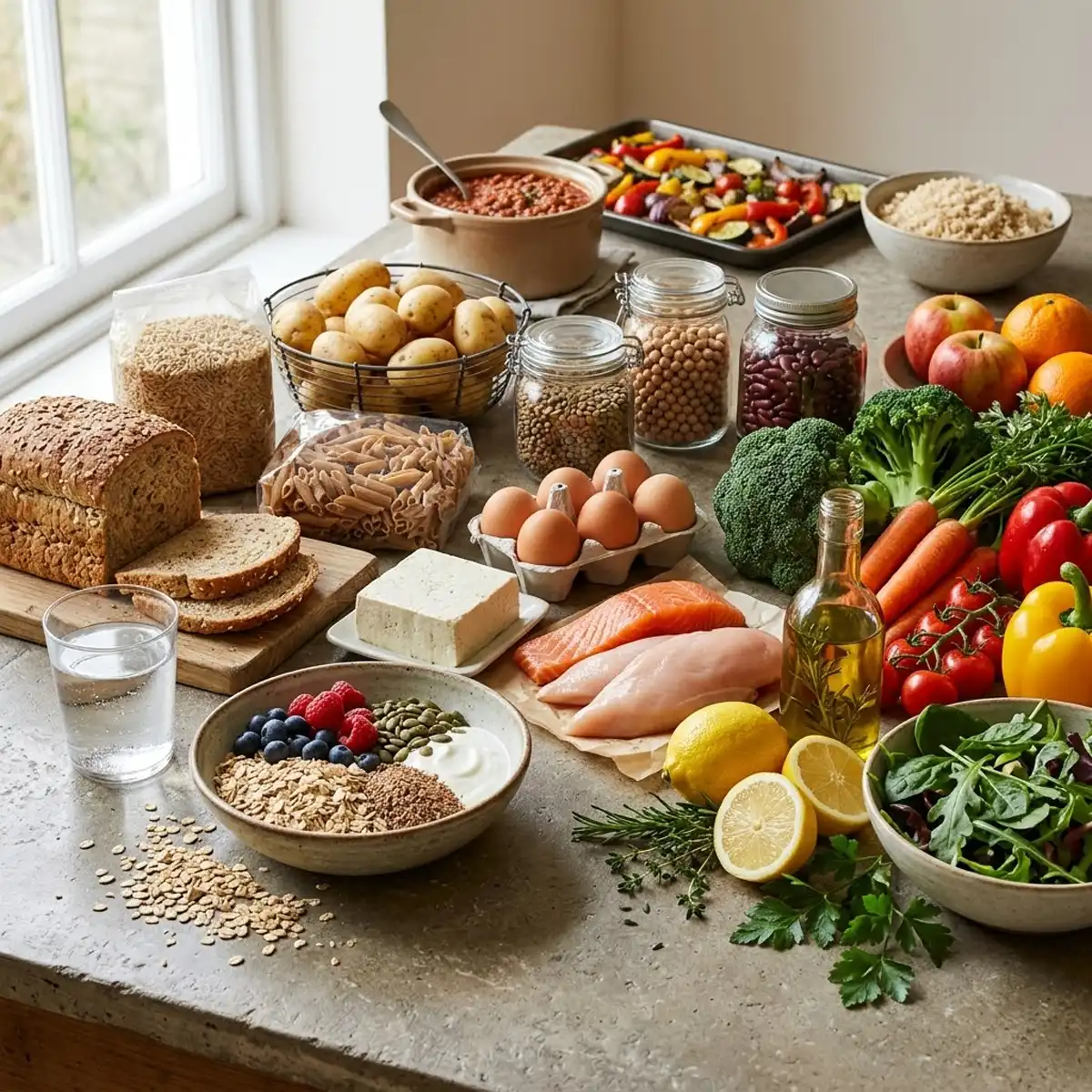
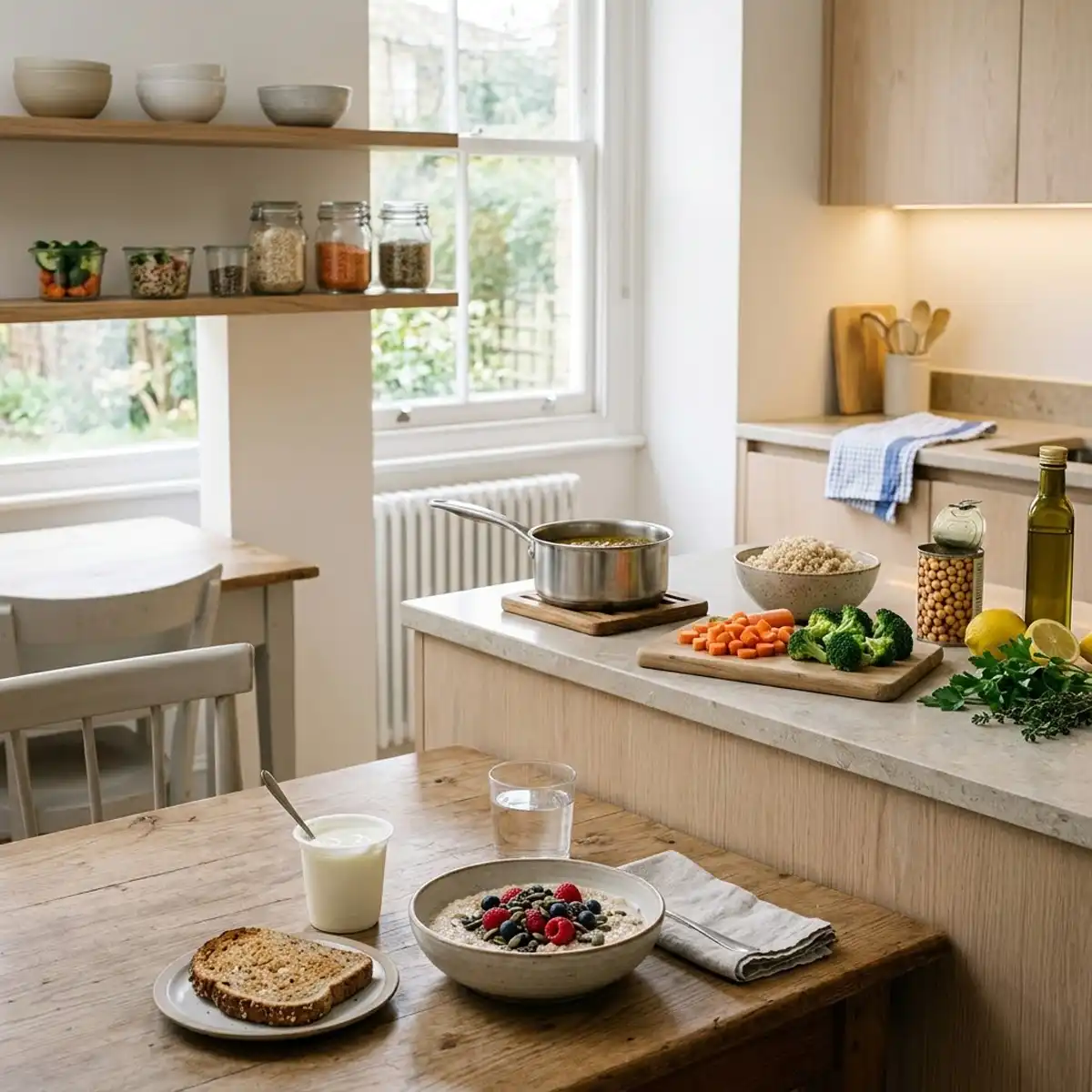
A good shopping list makes healthy eating feel less fragile. Buy oats, wholegrain bread, brown rice, wholewheat pasta, potatoes, lentils, chickpeas, kidney beans, eggs, plain yoghurt or fortified soya yoghurt, tofu, chicken or fish, frozen vegetables, salad leaves, carrots, broccoli, peppers, tomatoes, apples, berries, oranges, nuts, seeds, olive oil, lemons and herbs.
Frozen vegetables deserve more respect than they get. They are quick, affordable and often reduce waste. Tinned pulses are another weeknight gift. Rinse them, warm them, season them properly and they become soup, salad, chilli, curry or toast topping.
Fun fact: A medium baked potato with its skin can bring useful fibre, potassium and vitamin C, which is why potatoes can be far more helpful than their old diet reputation suggests.
Who Should Adapt This Meal Plan
People with diabetes, kidney disease, coeliac disease, food allergies, eating disorder history, pregnancy, breastfeeding needs or medication affected by food timing should adapt this meal plan with professional advice. A registered dietitian can make the plan safer and more personal.
The NHS Eatwell Guide notes that people with special dietary requirements or medical needs may need advice on adapting the guide. That is not a small-print disclaimer. It is practical. A high-fibre plan may need gentler pacing for people with IBS. A lower-salt plan may matter for blood pressure. A vegan version needs reliable vitamin B12, iodine, calcium and omega-3 planning.
If this plan feels too much, halve it. Choose 3 breakfasts, 3 lunches and 3 dinners. Repeat them until shopping becomes automatic.
How To Prep Without Losing Your Weekend
Meal prep works best when it saves future effort rather than consuming Sunday. Cook one grain, one tray of vegetables, one protein and one sauce. That is enough to make several meals without creating a fridge full of identical boxes.
For example, roast carrots, peppers and red onion with olive oil and cumin. Cook brown rice. Make lentil tomato sauce. Stir yoghurt with lemon, garlic and herbs. Those four jobs can become rice bowls, wraps, pasta, soup topping and side dishes. The whole point is flexibility. When time is short, our 10-minute detox recipes that actually satisfy slot straight into this plan.
How To Keep The Plan Going After Day 7
After day 7, keep the pattern and change the flavours. Switch lentil soup to minestrone, brown rice to bulgur wheat, chicken to tofu, salmon to sardines, and carrots to seasonal greens. A strong plan teaches rhythm rather than dependence on one menu.
As of 2025, the most useful nutrition advice still looks wonderfully ordinary: eat more plants, choose higher-fibre staples, keep protein steady, limit alcohol and sugary drinks, and make home cooking easier. The plan is not a cage. It is scaffolding.
Start with tomorrow’s breakfast and one dinner you can turn into lunch. Once those are handled, the week begins to look less like a negotiation with willpower and more like a well-stocked kitchen doing its job. If hydration is part of the problem, especially during heat or after exercise, add the homemade electrolyte drink with no sugar to your planning list rather than reaching for a sugary bottle by default.