
The phrase turns up in wellness conversations with increasing frequency and the claims attached to it vary widely. Some of those claims are supported by a decade of accumulating evidence. Others run well ahead of where the science currently sits. This piece works through the gut-brain axis from the biology up, distinguishing what is established from what is plausible-but-unproven, and keeping the question of what you can reasonably do about it in front of the research at all times.
The gut-brain axis is the bidirectional communication network between the gastrointestinal tract and the central nervous system. It was established as a physiological concept in the mid-twentieth century, but research into the role of the gut microbiome as a third participant in that communication network has expanded substantially over the past fifteen years. Leading research groups in this field include the APC Microbiome Ireland at University College Cork, the Rob Knight laboratory at UC San Diego, and Tim Spector's group at King's College London, whose work underpins the ZOE PREDICT programme.
The sources drawn on below include peer-reviewed systematic reviews, RCTs published 2020 to 2025, and position statements from the British Society of Gastroenterology and the British Dietetic Association. Where evidence is strong, this will say so. Where it is preliminary or mechanistically plausible without clinical endpoint data, that will also be said. If you are considering gut-targeted dietary changes to address mood symptoms, IBS, or a neurological condition, speak to your GP or a registered dietitian before making substantial changes, particularly if you are taking psychiatric medication or managing a diagnosed gastrointestinal condition.
What the gut-brain axis is and what components make it work
The gut-brain axis comprises four primary communication channels. First, the vagus nerve, the tenth cranial nerve, which carries sensory information from the gut to the brain and motor signals back. Approximately 80 percent of vagal fibres travel from gut to brain rather than brain to gut. Second, the enteric nervous system, a mesh of 200 to 600 million neurons embedded in the gut wall, sometimes called the "second brain" because it can operate semi-autonomously from the central nervous system. Third, the hypothalamic-pituitary-adrenal (HPA) axis, the hormonal stress system that connects emotional state to cortisol production and gut function. And fourth, the gut microbiome: approximately 100 trillion microorganisms in the colon, collectively weighing 1.5 to 2 kg and producing metabolites that interact with all three of the other channels.
The microbiome component is where the most rapid research advances have occurred since roughly 2015. Gut bacteria produce short-chain fatty acids (acetate, propionate, butyrate) as fermentation byproducts of dietary fibre. These SCFAs interact with gut barrier integrity, immune function, and, via effects on vagal signalling and systemic circulation, brain function. This is the pathway most strongly implicated in the gut-brain axis as currently understood.
How gut bacteria actually signal to the brain
Three mechanisms have reasonable evidence behind them. The first is short-chain fatty acid signalling. Butyrate, produced predominantly by Faecalibacterium prausnitzii and Roseburia species in the colon, crosses the gut barrier in small quantities and has been shown in animal studies to affect blood-brain barrier permeability and microglial function (microglia are the brain's resident immune cells). Human evidence for direct brain effects is more modest but present, with a 2023 systematic review in Molecular Psychiatry identifying consistent associations between higher SCFA production and lower levels of depressive symptoms in observational studies, while noting that causal inference requires further interventional research.
The second mechanism is tryptophan metabolism. Approximately 90 percent of the body's serotonin is produced in the gut, primarily by enterochromaffin cells in response to signals that include microbial metabolites. Gut bacteria also metabolise dietary tryptophan through the kynurenine pathway, producing compounds that can cross the blood-brain barrier and affect neurotransmitter balance. This is a complex pathway, and claims that "eating for your gut" will straightforwardly raise brain serotonin are oversimplifications of what the research actually shows.
The third mechanism is vagus-nerve-mediated signalling. Certain bacterial species, particularly Lactobacillus rhamnosus, have been shown in rodent models to reduce anxiety-like behaviour via direct vagal activation, with the effect abolished by surgical vagotomy. Translating this rodent evidence to humans has proven more complex, and the commercial "psychobiotic" category has largely outrun the clinical evidence on specific strains and specific human outcomes.
Fun fact: The 2022 RCT published in the journal Cell by the Sonnenburg laboratory at Stanford compared a 10-week high-fibre diet with a high-fermented-foods diet and found that the fermented-foods group showed both increased microbiome diversity and a reduction in 19 serum inflammatory proteins, while the high-fibre group showed more personalised responses.
What dietary interventions have the best evidence for gut-brain outcomes
The strongest evidence, in rough order of robustness. Mediterranean-pattern diets, which have been associated in multiple cohort studies and several interventional trials with reduced depression risk and improved mood outcomes, with the SMILES trial published in BMC Medicine in 2017 remaining the most-cited intervention study showing a 12-week Mediterranean-pattern diet produced clinically meaningful reductions in depression scores in adults with moderate-to-severe depression. The HELFIMED follow-up in 2019 extended these findings with similar results.
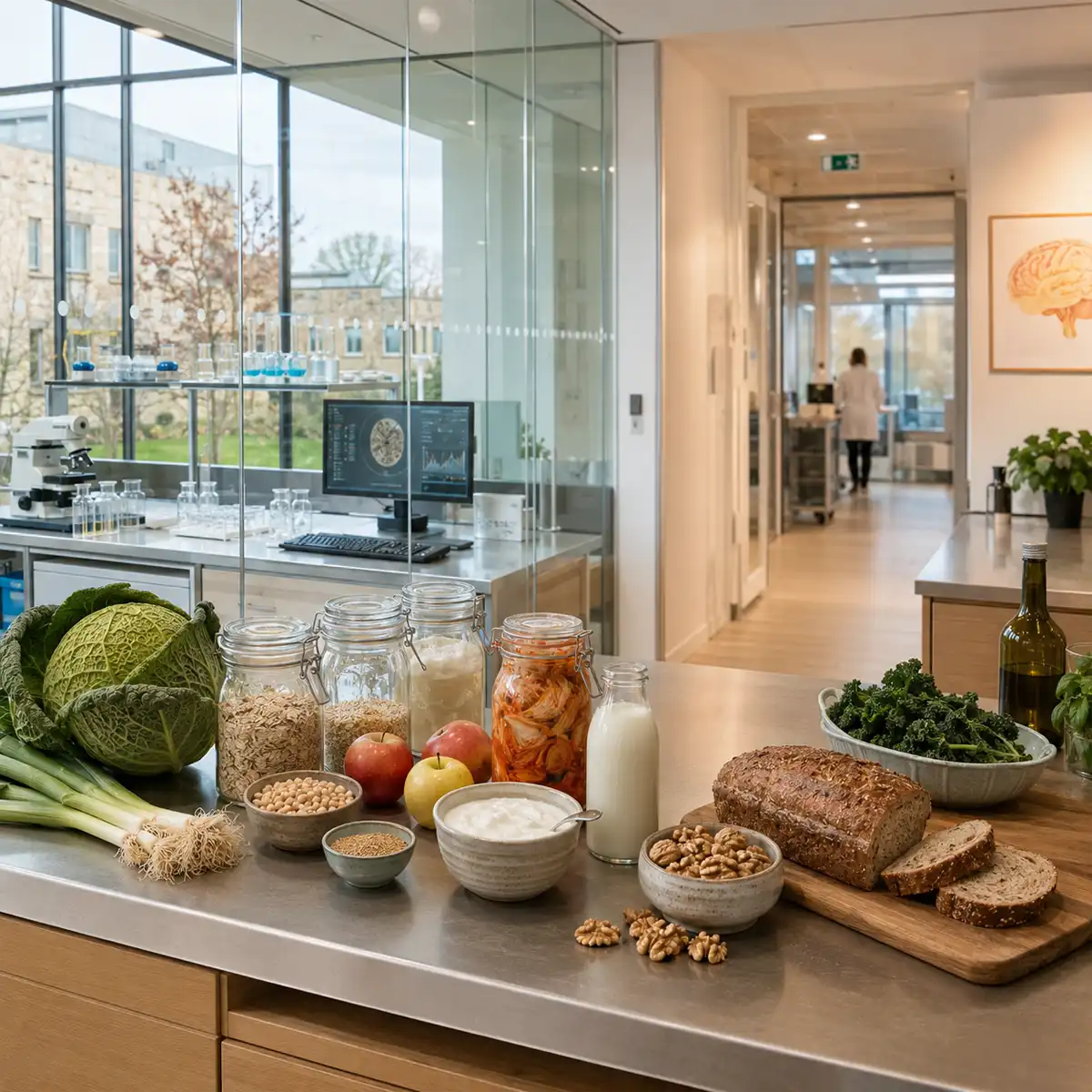
Fibre intake at 25 to 30g per day, consistent with UK Scientific Advisory Committee on Nutrition guidance, supports SCFA production, microbial diversity, and gut barrier integrity. UK average fibre intake is currently around 19g per day, so most adults have meaningful room for improvement. Fermented foods, as demonstrated in the 2022 Cell RCT noted above, increase microbial diversity and reduce inflammatory markers. Examples include kefir, natural yoghurt with live cultures, kimchi, sauerkraut, miso, and kombucha.
Polyphenol intake from vegetables, fruits, whole grains, olive oil, tea, coffee, and dark chocolate contributes to microbial diversity, with certain polyphenol-rich foods (cranberries, green tea) showing specific effects on beneficial bacterial populations in a 2024 review in Gut Microbes. The evidence for targeted probiotic supplements is weaker and more strain-specific. Recommending a specific probiotic for gut-brain outcomes requires more individualised clinical judgment than most commercial marketing acknowledges.
What the evidence does not yet support and where claims outrun data
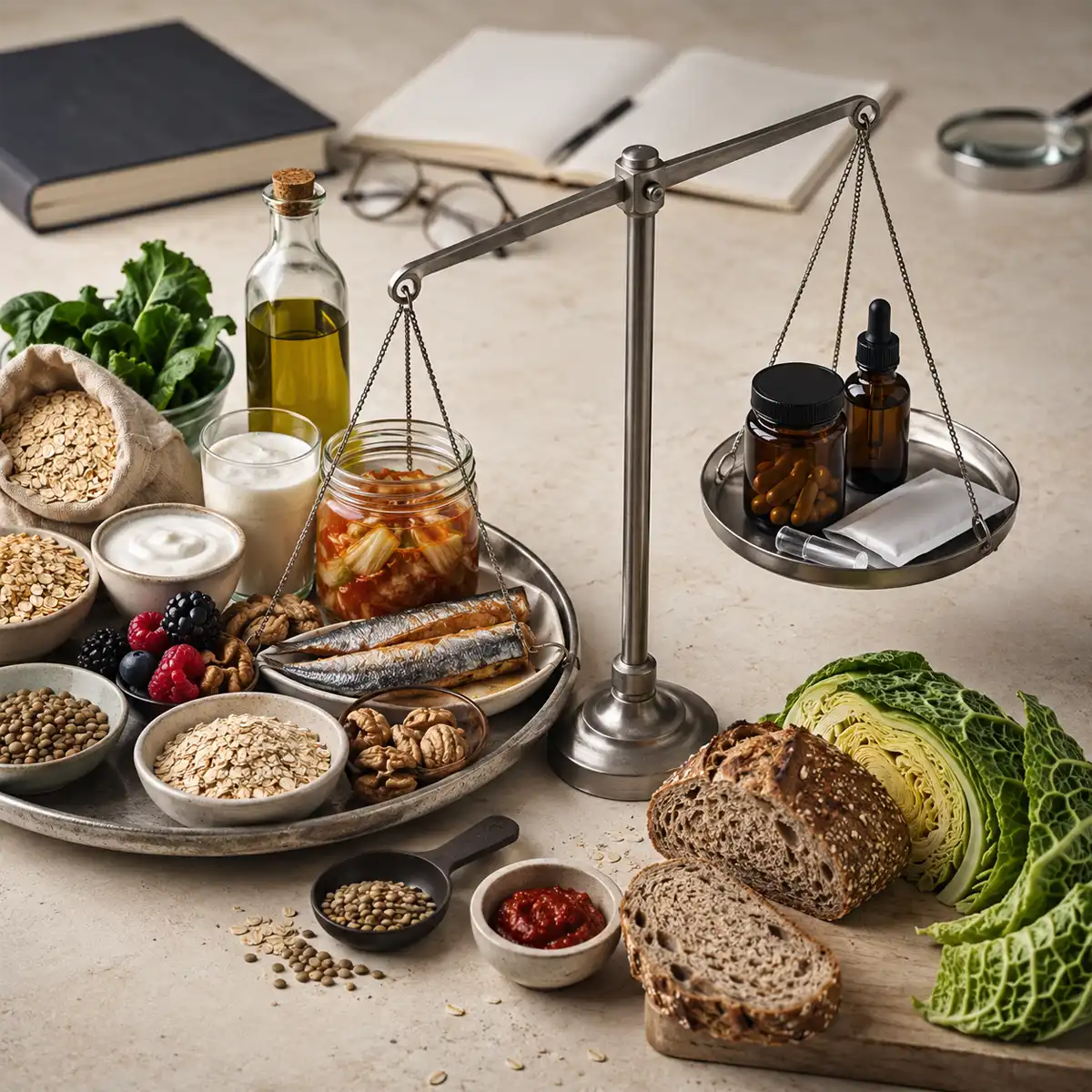
Three areas where commercial and wellness claims run substantially ahead of the clinical evidence. First, specific probiotic strains marketed for mood, anxiety, or cognitive outcomes. The term "psychobiotic" was coined by Dinan and Cryan in 2013 and the field has produced some promising early-stage RCT data, but as the 2023 Nutrients review summarised, the evidence for specific strain-to-outcome pairings is inconsistent and often fails to replicate across populations. If a probiotic is being sold for mental health outcomes with confident marketing, the evidence is almost certainly thinner than the claim.
Second, "leaky gut syndrome" as a clinical diagnosis. Increased intestinal permeability is a real phenomenon and is involved in several conditions including coeliac disease, Crohn's disease, and alcoholic liver disease, but "leaky gut" as a standalone syndrome causing a diffuse range of symptoms is not currently recognised by the British Society of Gastroenterology or the National Institute for Health and Care Excellence. Protocols marketed to heal leaky gut often rely on expensive supplements without clinical trial support.
Third, faecal microbiota transplantation (FMT) for any condition other than recurrent Clostridioides difficile infection. FMT has strong evidence for recurrent C. diff and is used clinically in the NHS for that indication. Its application to depression, anxiety, autism spectrum conditions, obesity, or inflammatory bowel disease remains investigational. Outside of approved clinical trials and the C. diff indication, FMT is not recommended for UK patients and private DIY attempts carry infection risks that are genuinely serious.
What the research suggests you can reasonably do starting this week
The research-supported practical summary, with evidence tiers clearly stated. Tier 1 (strong evidence, low risk, clear recommendation): a Mediterranean-pattern eating pattern with vegetables, pulses, whole grains, oily fish, olive oil, and limited ultra-processed food. Tier 2 (good evidence, low risk, reasonable to try): daily fibre targeting 25 to 30g from whole-food sources, regular fermented foods 4 to 7 times per week, polyphenol diversity across the week. Tier 3 (mechanistically plausible, evidence emerging, individualised): specific probiotic supplementation, which is more useful to discuss with a registered dietitian or gastroenterologist than to self-select at Holland and Barrett. Tier 4 (insufficient evidence, not recommended): DIY leaky gut protocols, specific psychobiotic supplements marketed for mood, FMT outside of clinical trial or C. diff indications.
If you are experiencing persistent gastrointestinal symptoms (more than 6 weeks of changed bowel habits, unexplained weight loss, blood in stool, night-time diarrhea), these warrant GP assessment rather than dietary self-management, because several conditions including inflammatory bowel disease and colorectal cancer can present with symptoms that overlap with gut-brain framing. If you are experiencing mental health symptoms at a level that affects daily function, the research on gut-brain intervention does not replace evidence-based mental health care. It can sit alongside it, not instead of it.
Where the research is moving and what to watch for
Three areas of active research worth watching. Personalised microbiome interventions, in which microbiome sequencing is paired with dietary recommendations tailored to the individual microbial profile. The ZOE PREDICT programme is the largest UK-based work in this area; initial results published in Nature Medicine in 2020 suggested individualised responses to identical foods, which may eventually reshape how dietary advice is delivered. This work is promising but still developing.
Psychobiotic strain development, where specific bacterial strains are being tested in human RCTs for depression, anxiety, and cognitive performance. Early results are mixed; the 2024 Lancet Psychiatry commentary characterised the field as "genuinely promising but considerably less mature than commercial marketing suggests." Gut-brain axis applications in neurodegenerative disease, where emerging research on the vagal transport of misfolded proteins in Parkinson's disease has produced genuinely significant findings, though clinical translation is years away.
A measured summary and a sensible starting point
The gut-brain axis is a real and increasingly well-characterised biological communication system, and dietary patterns do appear to influence both gut and brain outcomes through mechanisms that are partly established and partly emerging. The sensible starting point is a Mediterranean-pattern diet, 25 to 30g of fibre daily, regular fermented foods, and a genuine reduction in ultra-processed food intake. These interventions sit at Tier 1 and Tier 2 of the evidence hierarchy above, carry minimal risk, and produce measurable benefits for general health regardless of whether specific gut-brain outcomes materialise. The interventions that run ahead of evidence (psychobiotic supplements, leaky gut protocols, DIY FMT) should be approached with scepticism appropriate to the early state of the research. Consult a registered dietitian or gastroenterologist for any gut-brain-focused intervention beyond general dietary pattern change.
kimchi recipe UK with British cabbage and our existing kefir and gut health what UK research shows