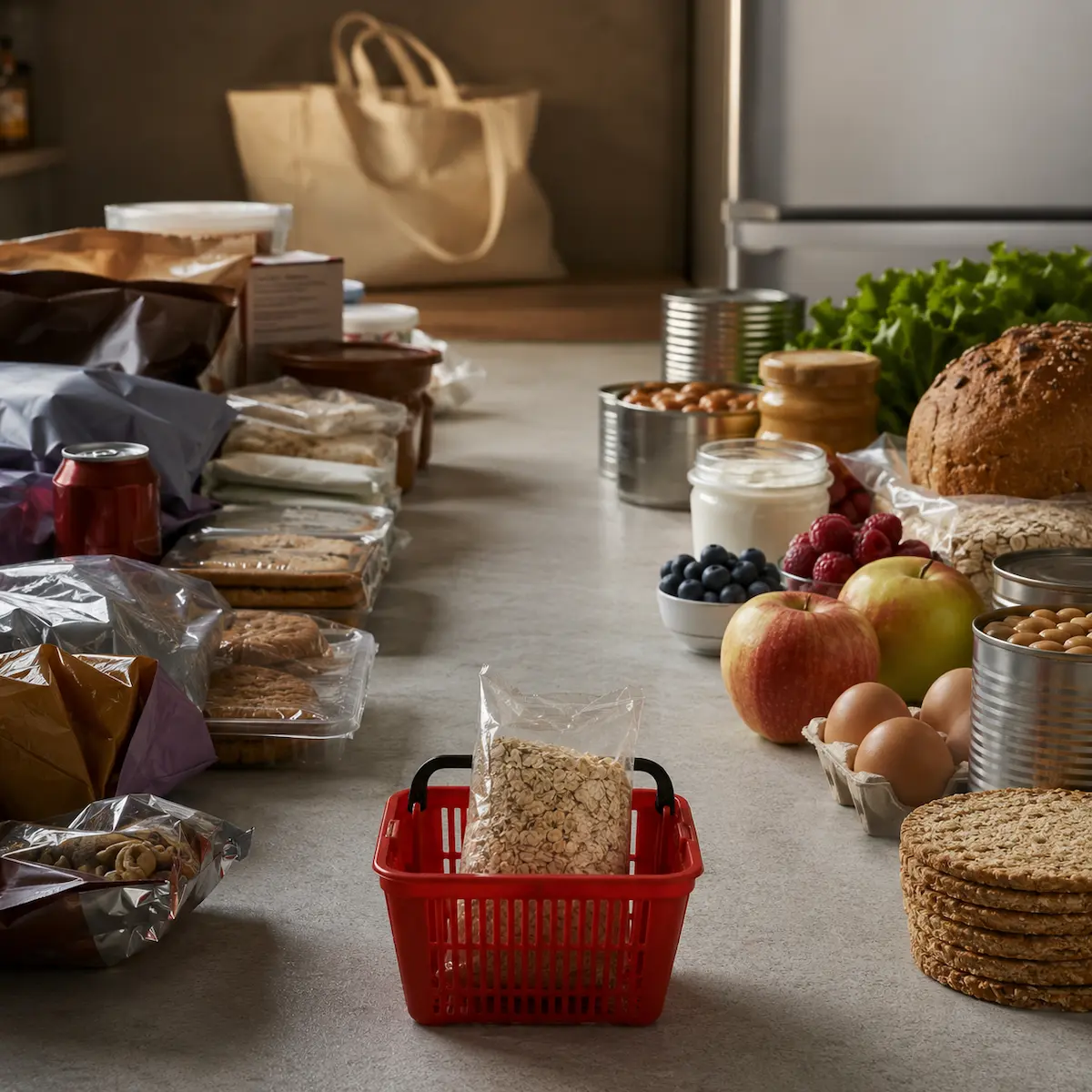
It is 6.47 pm on a Wednesday. You walked into Tesco to grab milk. Twelve minutes later you are queuing with a meal deal, a packet of Hobnobs, and a ready meal for tomorrow night because the week already got away from you. Most of what is in that basket falls into the category nutrition researchers call ultra-processed food. None of it is moral failure. All of it is pattern, and patterns are what these ultra-processed food swaps are designed to interrupt, one basket at a time.
The gap most of us know best is the one between understanding that ultra-processed food is linked to poorer health outcomes and actually putting something different in the trolley at 6.47 pm. This piece is not about eliminating UPF. It is about swaps that work at the actual British supermarkets most of us shop at: Tesco, Sainsbury's, Aldi, Lidl, M&S. The swaps are specific, practical, and priced so the version that takes 10 extra minutes to prepare is not also the version that costs twice as much.
The evidence backdrop, briefly. A 2019 randomised controlled trial by Kevin Hall at the US National Institutes of Health found that adults eating an ultra-processed diet consumed 500 calories per day more than when eating matched unprocessed meals, with no instruction to restrict. A 2024 umbrella review in the BMJ pulled together 45 meta-analyses and found consistent associations between higher UPF intake and cardiovascular disease, type 2 diabetes, depression, and all-cause mortality. UK data from 2024 (Public Health England continuity research and the ZOE PREDICT study) puts average UPF intake at 57 percent of daily calories, which is among the highest in Europe. Before changing your eating pattern substantially, speak to your GP or a registered dietitian, particularly if you manage diabetes, IBS, or an eating disorder where swap-based thinking can tip into restriction.
What counts as ultra-processed food and why the NOVA classification matters
Ultra-processed food is defined by the NOVA classification, developed by Monteiro and colleagues at the University of São Paulo and now adopted in UK nutrition research. NOVA Group 4 products contain ingredients rarely found in home kitchens (emulsifiers, hydrogenated oils, modified starches, flavour enhancers) and are typically industrially produced to be ready-to-eat, hyperpalatable, and cheap. Crisps, biscuits, most breakfast cereals, flavoured yoghurts, ready meals, sliced packaged bread, sausages, chicken nuggets, ice cream, and fizzy drinks sit in this group.
What is not ultra-processed: natural yoghurt, frozen vegetables, tinned beans, porridge oats, whole-grain bread from a bakery, fresh fish, eggs, and milk. The distinction is not "processed versus not processed." Tofu is processed. Sardines in tins are processed. Neither is ultra-processed. The swaps below keep convenience without crossing into NOVA Group 4.
Breakfast swaps that land at 7 am when you are already rushing
The most stubborn breakfast UPFs in a British kitchen are sugary cereals, flavoured yoghurts with fruit at the bottom, and sliced packaged white bread. Each has a swap that takes less than 90 seconds more than the version it replaces. Swap Nestle Coco Shreddies or Kellogg's Frosties for 50g rolled oats with 200ml semi-skimmed milk, microwaved for 90 seconds, topped with a tablespoon of frozen berries. Around 40p per serving versus 55p. Swap Muller Corner or Yoplait Petits Filous for 150g Yeo Valley natural or Onken plain yoghurt with half a teaspoon of honey and 80g frozen blueberries straight from the freezer. The fruit thaws during the commute. Swap Warburtons Toastie or Kingsmill Medium White for a supermarket bakery sourdough or a seeded rye loaf from the in-store bakery, sliced and frozen on day one for week-long toast.
The point is not that these swaps deliver dramatic health transformation. It is that the cumulative pattern of doing them on most mornings shifts your baseline gradually. Perfection is not the target. Two breakfasts a week is a meaningful start.
Lunch swaps that beat the meal deal habit
The 12.30 meal deal is a weekday British institution and it sits at the heart of UPF intake for office workers. The average meal deal contributes approximately 800 to 1100 calories, 40 to 60 percent of which come from NOVA Group 4 products. Swap the Tesco Finest Chicken Triple sandwich plus Walkers crisps plus Coke Zero for a wholegrain pitta filled with 100g tinned tuna (in olive oil, drained), a handful of salad leaves, and a spoon of Greek yoghurt mixed with lemon and mustard, plus an apple and a bottle of water. Prepared the night before in 4 minutes, £1.80 versus £3.90, around 480 calories versus 950.
If the night-before preparation never happens (and honestly, often it does not), the in-supermarket alternative is the M&S Count On Us salad range or the Sainsbury's Taste the Difference salad bowls, which are lower in emulsifiers and preservatives than most sandwich options. Pair with a small carton of kefir from the dairy aisle and a piece of fruit. Most UK supermarkets now stock Biotiful kefir or Yeo Valley Super Smoothie for £1.50 to £2. Not the absolute ideal, but a meaningful step above the meal deal.
Fun fact: A 2022 observational study in the BMJ following 22,000 Italian adults over 10 years found that replacing 10 percent of ultra-processed food with minimally processed alternatives was associated with a 15 percent lower risk of cardiovascular mortality, though observational data cannot establish causation on its own.
Dinner swaps for the Tuesday when you are actually going to cook
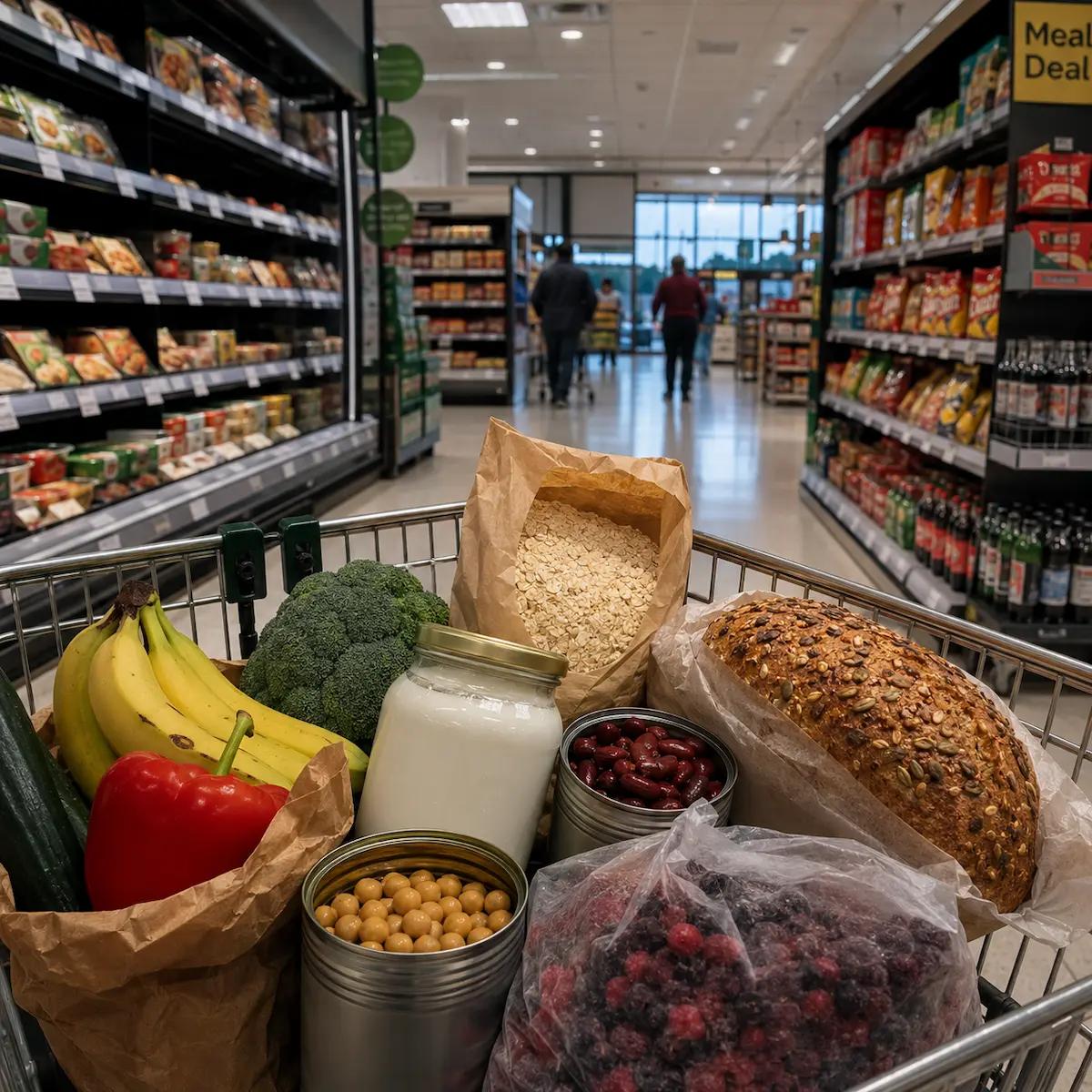
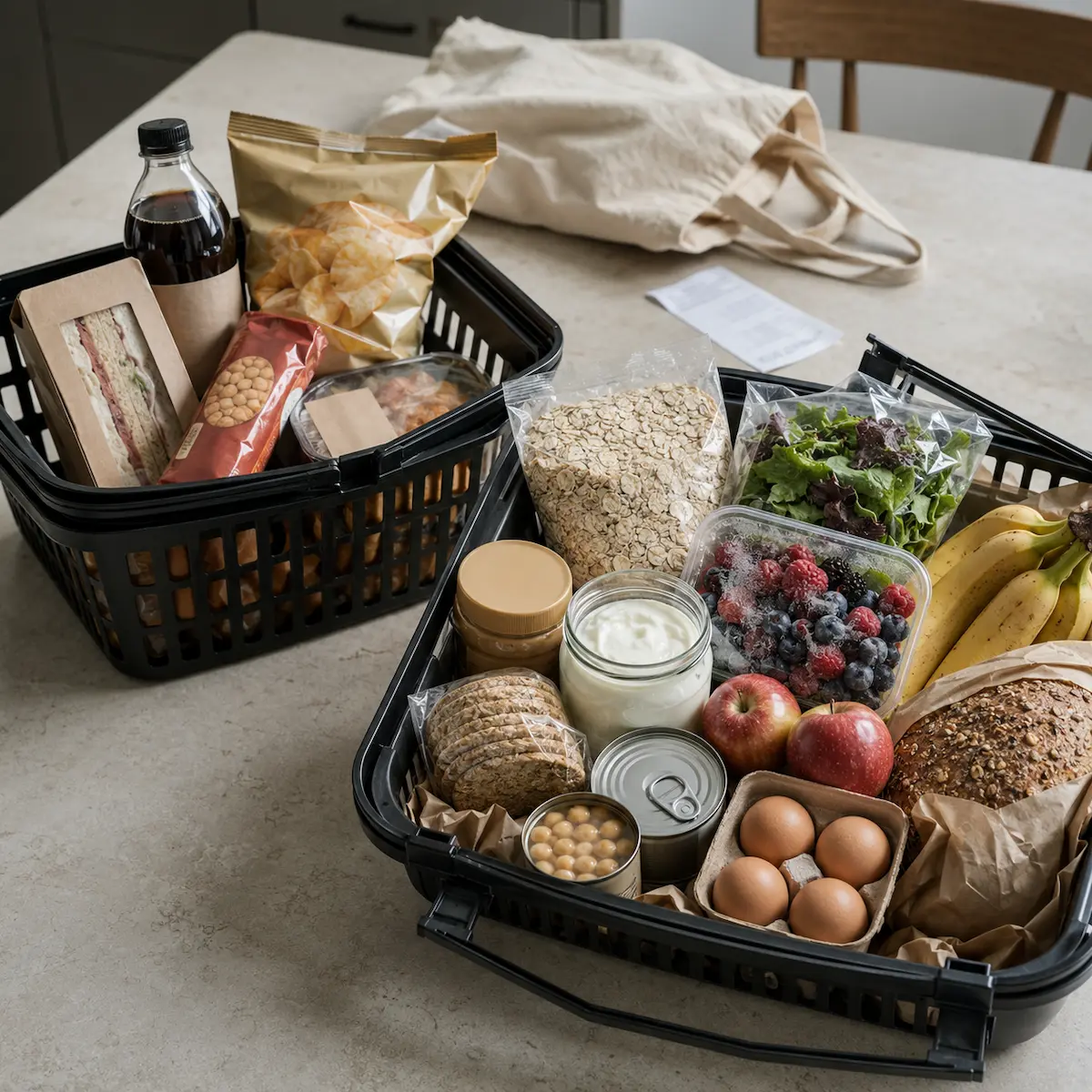
The ready meal is the product that ate home cooking. Swap the Tesco Finest Chicken Tikka Masala ready meal plus microwave rice for the chickpea and spinach dal on this site, which takes 20 minutes start to finish, yields 3 portions, and costs roughly £1.20 per serving versus £5.50 for the equivalent ready meal serving. Swap Charlie Bigham's Fish Pie for a tray of salmon fillets, sweet potato chunks, and tenderstem broccoli roasted together at 200°C for 22 minutes. Swap Dolmio bolognese sauce plus mince plus spaghetti for a homemade version with tinned chopped tomatoes, a tube of tomato puree, fresh garlic, dried oregano, a bay leaf, and the same mince, cooked for 20 minutes. The shop-bought sauce is Dolmio because of a long additive list; the homemade version is £1.60 cheaper across a family serving and contains ingredients your grandmother would recognise.
Snack swaps when the 3 pm biscuit tin is calling
The 3 pm dip in energy that most office workers know well is part of the circadian glucose rhythm, and a UPF snack tends to make it worse because of the steep glucose rise and fall it triggers. Practical, not punishing, swaps. Instead of a packet of Hobnobs, two oatcakes with a generous spoon of natural peanut butter (Meridian or Pip & Nut with no palm oil) and a sliced banana. Instead of a Walkers multipack bag, a handful of salted almonds and an apple. Instead of a Mars bar, a small square of 70 percent dark chocolate and a hot tea. These are not austere substitutes. They take the edge off the crash and cost roughly the same or less per snack.
How to read a British supermarket label in 30 seconds
A practical shortcut. Flip the packet to the ingredient list. If the list is longer than 10 ingredients, contains multiple words you would not find in a domestic kitchen (emulsifier E471, maltodextrin, modified maize starch, sodium nitrite), or lists sugar in any of its 60 guises in the first three ingredients, it is very likely NOVA Group 4. This is not a scientific identification, but it is a reliable 30-second filter at a Tesco aisle at 6.47 pm.
The front-of-pack traffic light system is useful as a secondary check. Red markers for salt, sugar, or saturated fat are a signal, particularly red markers combined with a long ingredient list. This is where the NOVA classification and UK traffic light labelling reinforce each other, because a nutritionally poor UPF will usually show both.
Why aim for most swaps most of the time and not perfection?
The psychology of habit change around food is well documented. Studies consistently find that all-or-nothing approaches, and elimination-based protocols, predict earlier abandonment compared with incremental pattern shifts. A 2023 review in the journal Appetite found that 70 percent of participants who attempted strict UPF elimination reverted within six weeks, while those aiming for a 25 percent reduction in UPF intake maintained the shift at 12-month follow-up.
The practical translation: pick two meal categories (say, breakfast and afternoon snacks) and run the swaps for those consistently for a fortnight. Leave your lunch and dinner routines untouched for the first two weeks. Then add one more category and carry on. This is slower than a reset, and it is substantially more likely to last. If your relationship with food is already anxious or restrictive, or if you are recovering from or managing an eating disorder, work with a registered dietitian rather than self-directing any swap-based programme.
Start at breakfast start this week
Pick tomorrow's breakfast as the first switch. Porridge with frozen berries. Or natural yoghurt with honey and blueberries. Not both mornings. Just the one you already feel least committed to, and stay with it for a fortnight. After two weeks, the afternoon snack becomes the next focus. After four weeks, the Wednesday meal deal turns into a home-packed lunch twice out of five days. That is how ultra-processed food swaps hold up against a real British working week. Small, repeated, non-negotiable, and cheap enough that the cost argument cannot bring you back to Dolmio on Tuesday. If you want a GP to run a baseline lipid panel or HbA1c before you start, book a routine appointment. Concrete numbers help the changes feel real.
sugar reduction strategies that stick for UK adults and detox water recipes UK